
How Advertising EV Chargers are Redefining Retail ROI in 2026
Quick Answer: Advertising EV chargers redefine retail return on investment (ROI) in 2026 by converting a single parking bay into two independent revenue streams: electricity sales and digital media inventory. A DC fast charger with an integrated high-brightness advertising screen lets a shopping center, supermarket, or mixed-use landlord monetize the 20–40 minutes a driver spends charging, while measurably lifting dwell time and in-store spend. Financial modeling for 2026 indicates that a 120kW–240kW advertising charger can recover its capital cost in 24–36 months at realistic advertising fill rates, compared with 60–84 months for a conventional charger of identical power output. For retailers that already own the parking asset, the advertising EV charger is no longer experimental hardware; it is a calculable profit center with payback periods that rival food-court kiosks and rooftop solar arrays.
Key Takeaways:
- Dual-revenue architecture — charging fees plus advertising sales can compress payback from roughly 5 years to under 3 years on the same parking bay.
- Dwell-time economics — a 120kW+ fast charger creates a guaranteed 20–40 minute on-site audience that retailers can convert into foot traffic and basket spend.
- Screen quality is a hard requirement — high-brightness 4K panels rated above 1000 nits remain readable in direct sunlight, which is the difference between a media asset and a dead panel.
- Remote management matters — OCPP 1.6J/2.0.1 cloud platforms let one operator control energy pricing and advertising content across an entire network from a single dashboard.
- Modular power scaling — 60kW–400kW platforms allow retailers to start small and add power as EV adoption grows, without re-engineering the site.
The Retail Energy Transition: Why 2026 Is the Inflection Point
Retail parking is being repriced in real time. EV adoption in mature markets crossed the point where charging infrastructure influences site selection, and 2026 is the year the economics flipped for property owners. A parking space that once produced zero revenue now competes with prime digital out-of-home (DOOH) inventory, because the audience standing next to it is captive, affluent, and present for a measurable window of time.
The shift is visible in how retailers now frame the investment. In 2023, most mall operators treated charging as a loss-leading amenity: install chargers, absorb the cost, and hope for goodwill. By 2026, the dominant question has changed from “should we install charging?” to “which charging hardware produces the best combined energy and media yield?” That question is only answerable with hardware that can do both jobs at once, which is precisely what the advertising EV charger category was built for.
Several structural forces explain the timing. Utilization at public DC chargers now approaches operational breakeven in high-traffic locations; retail media has matured into a measurable channel with consistent CPMs; and the hardware itself matured, with commercial-grade 4K displays, IP54 enclosures, and OCPP-certified charging cores packaged into single, serviceable units.
Anatomy of an Advertising EV Charger
An advertising EV charger is not a standard charger with a monitor bolted on. It is an integrated product in which three subsystems are engineered to coexist: the charging core, the media display, and the management layer. Understanding each subsystem is the first step to underwriting the ROI case.
The Charging Core
The charging core determines how much energy revenue a bay generates per hour. AD20-series stations span 60kW to 400kW with 1000V DC output and dual-gun intelligent power distribution, serving two vehicles simultaneously while dynamically balancing power between them. That translates into higher daily throughput: a 240kW unit completes two 20–40 minute sessions back-to-back without idling, while a 60kW unit may still be serving the first vehicle. Power output is the largest lever on energy revenue, which is why the 180kW–240kW bracket has become the default retail specification in 2026.
The Media Display
The media display is the second revenue engine, and its specifications determine advertising yield. AD20-series units integrate 32-inch, 43-inch, or 55-inch high-brightness 4K Android displays. High brightness is non-negotiable outdoors: a panel below 800 nits becomes unreadable in direct sunlight, killing impressions and driver trust. The Android architecture lets operators run dynamic content—rotation, programmatic feeds, alerts, and retailer promotions—without replacing hardware, and the 55-inch format approaches billboard visibility from across a parking lot.
The Management Layer
The management layer turns a collection of islands into a network. AD20-series stations are OCPP 1.6J and 2.0.1 compatible, support RFID, mobile APP, and POS payments, and communicate over 4G, WiFi, or Ethernet, so a head-office operator can update energy tariffs in the morning and push a new advertising playlist in the afternoon across hundreds of sites from one dashboard. This remote control is also what advertising sales teams need, because inventory must be booked and delivered on schedule to command premium rates.
| Capability | Conventional DC Fast Charger | Advertising EV Charger (MIDA AD20 Series) |
|---|---|---|
| Revenue streams | Charging fees only | Charging fees + media/advertising sales + sponsored sessions |
| Screen | Small status display | 32″–55″ high-brightness 4K Android panel |
| Audience engagement | Incidental | Guaranteed 20–40 min captive audience per session |
| Management | OCPP charge data only | OCPP 1.6J/2.0.1 + remote ad content scheduling (4G/WiFi/Ethernet) |
| Typical payback (retail site) | 60–84 months | 24–36 months at realistic fill rates |
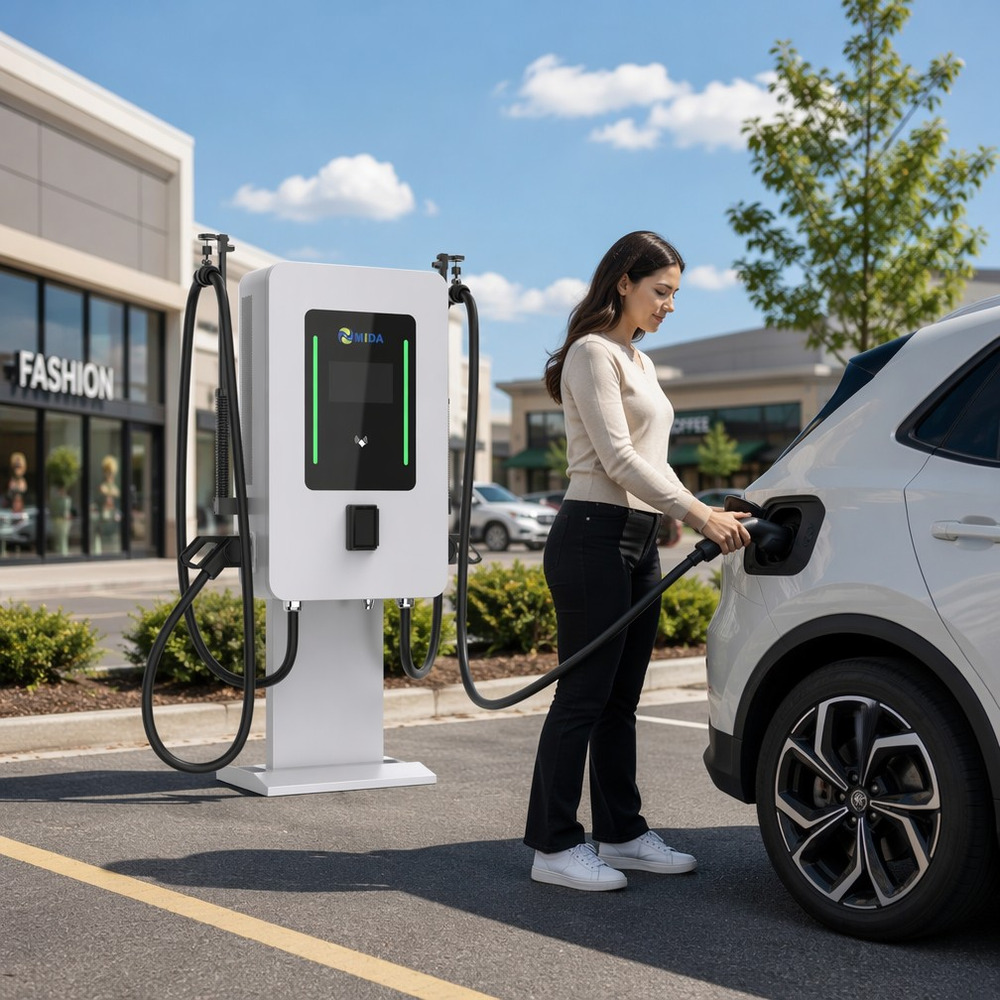
The Dual-Revenue Model: Charging Fees Plus Media Inventory
The ROI case rests on two revenue lines that behave differently and therefore de-risk each other. Charging revenue is predictable but capped by utilization and tariffs; advertising revenue is less predictable early but scales with network size and location quality. Together they produce a blended yield conventional hardware cannot match.
Energy Revenue
Energy revenue is kilowatt-hours delivered multiplied by the spread between retail tariff and grid purchase price. A 240kW station in a mid-traffic lot delivers roughly 150–400 kWh per bay per day; at a margin of USD 0.10–0.20 per kWh, one bay generates USD 5,500–29,000 per year before media revenue. Utilization is the dominant variable, so location quality—anchor proximity, entrance visibility, and catchment income—remains the first underwriting criterion.
Advertising Revenue
Advertising revenue is sold either as direct sponsorship (a brand or tenant buys a fixed slot for a month) or through programmatic DOOH networks. A 55-inch screen running 10-second spots in a 60-second loop at a mall charger achieves roughly 800–1,200 verified impressions per day at realistic session counts. At blended CPMs of USD 8–18 for retail-environment DOOH, that equals USD 2,300–7,900 per screen per year at conservative fill; well-run sites with multiple stations and strong tenant demand report multiples of that figure. The economics improve further when the screen is shared with the property owner’s own messaging—tenant directories, wayfinding, and in-mall promotions—because that internal inventory has near-zero marginal cost and replaces printed signage spend.
Direct Sponsorship vs. Programmatic
Direct deals suit local tenants; programmatic suits network scale, and most operators run both in parallel.
Sponsored Charging and Hybrid Models
Sponsored charging, where a brand funds free or discounted sessions in exchange for a longer engagement window, is the fastest-growing format in 2026. It converts waiting time into a brand experience and gives the operator a third pricing lever: the advertiser pays, the driver charges free, the operator collects a premium media fee. Retailers pairing sponsored sessions with same-day store coupons report measurable uplifts in redemption rates.
| Revenue Line | Conservative 3-Year Estimate (per bay) | Key Drivers |
|---|---|---|
| Charging fees (240kW, ~30% utilization) | USD 16,500–30,000 | Tariff spread, sessions per day, power output |
| Advertising (55″ screen, 50% fill) | USD 7,000–24,000 | CPM, verified impressions, fill rate |
| Sponsored sessions & promotions | USD 3,000–12,000 | Local brand demand, redemption partnership |
| Total blended yield | USD 26,500–66,000 | Location quality and network scale |
Dwell Time, Foot Traffic, and the New Retail Metric
Retail ROI is not only a revenue calculation; it is also a traffic calculation, and this is where advertising chargers outperform conventional units. A Level 2 charger keeps a car parked for 4–8 hours, which produces almost no incremental foot traffic because the driver is unlikely to linger. A 120kW+ DC charger, by contrast, produces a 20–40 minute window in which the driver must stay near the car but cannot usefully sit in it—the exact duration retail science associates with a browsing visit to a supermarket, a coffee purchase, or a quick-service meal. The charger effectively imports customers who would not otherwise visit the site, and it does so at a predictable cadence that operations teams can plan around.
Dwell-time conversion depends on layout: a charger at the far corner of an empty lot captures only the fee, while one within a short walk of the anchor tenant converts the same session into basket spend. Leading operators co-locate charging with click-and-collect points and food courts, and the screen itself pulls drivers toward the entrance before they unplug, functioning as an additional wayfinding and merchandising surface.
Total Cost of Ownership and Deployment
Advertising chargers carry a hardware premium over conventional units, and the ROI model must account for it honestly. The premium buys the display subsystem, the integrated enclosure, and the software stack; in exchange, the owner avoids purchasing, mounting, and maintaining a separate digital signage network, a substantial line item in multi-site portfolios.
Hardware and Installation
Site costs split into the station, the grid connection, and civil works. A 60kW–120kW unit can often run on an upgraded existing connection, while 240kW–400kW units typically require a dedicated transformer planned with the utility early. Floor-mounted AD20 designs eliminate pole and wall mounting work, IP54 enclosures remove the need for weather shelters, and CE certification shortens permitting in regulated markets.
Operations and Maintenance
Operating cost is dominated by electricity procurement, connectivity, and periodic display maintenance. Remote diagnostics reduce truck rolls, and the Android media player updates over the air, keeping content fresh without site visits. A realistic maintenance allowance is 2–4% of hardware value per year, comparable to conventional DC hardware, since display upkeep largely replaces a separate signage installation.
| Cost Component | Conventional 180kW Station | Advertising 180kW Station | Net Difference |
|---|---|---|---|
| Hardware (indicative) | USD 18,000–25,000 | USD 26,000–34,000 | +USD 6,000–12,000 |
| Separate signage network (per site) | USD 3,000–8,000 | Included | −USD 3,000–8,000 |
| Installation & grid (typical) | USD 8,000–20,000 | USD 8,000–20,000 | Neutral |
| Annual media content production | Not applicable | USD 500–2,000 | Small, often client-funded |
| Blended payback at 30% utilization | 60–84 months | 24–36 months | 2× faster capital recovery |
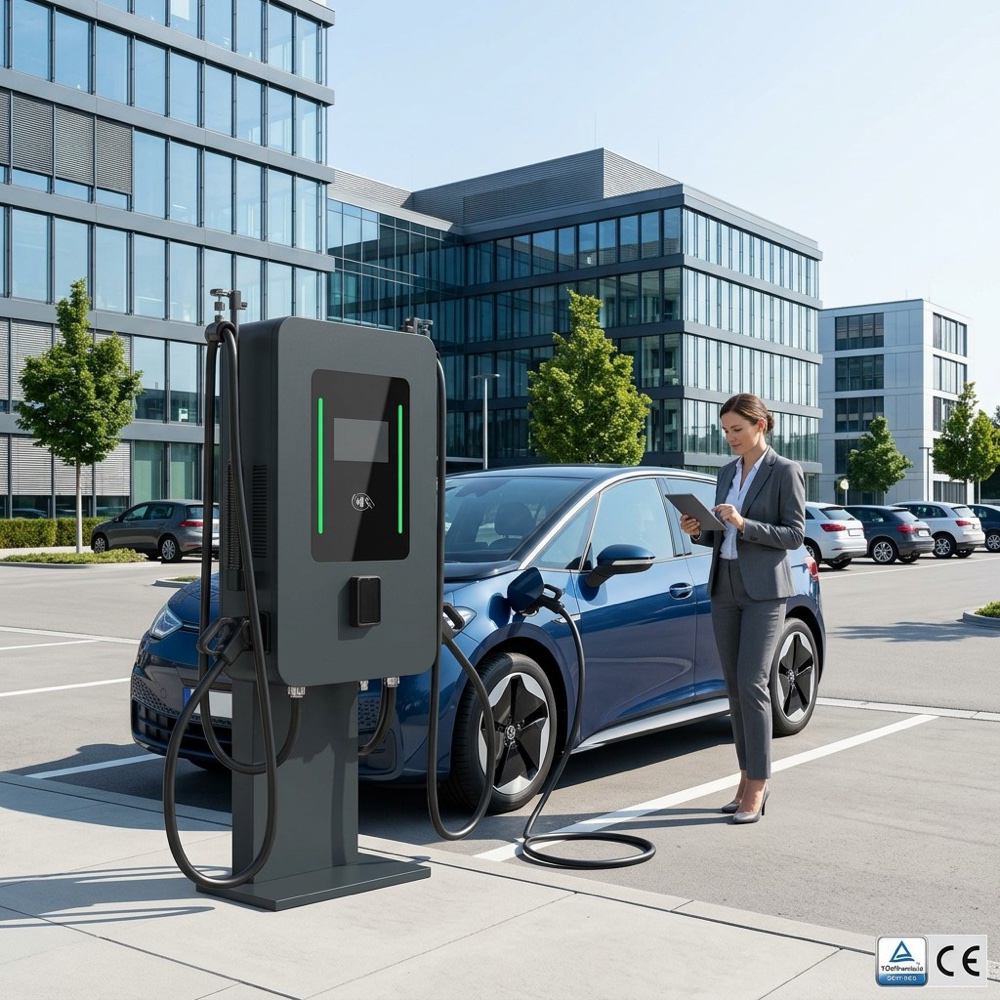
Deployment Checklist for Retail Owners
The difference between a profitable media-charging site and a stranded asset is execution discipline. Retail owners preparing a 2026 deployment should work through the following checklist before signing hardware orders:
- Underwrite the bay first. Model charging revenue from local tariffs and realistic utilization (25–40% for prime retail), then add media revenue at conservative fill rates.
- Choose power by traffic, not by trend. 60kW suits convenience stops; 180kW–240kW suits anchors and supermarkets; 360kW+ suits highway-adjacent and destination retail.
- Specify the screen for the environment. Outdoor bays require high-brightness panels; covered or indoor parking can use standard 4K, but the 55-inch format maximizes visibility and therefore CPM.
- Negotiate OCPP and payment flexibility. Confirm OCPP 1.6J/2.0.1 compliance and multi-payment support (RFID, APP, POS) so the station can join any roaming network and accept any customer.
- Plan the ad sales channel. Decide whether to sell direct to tenants, join a DOOH programmatic network, or hire a media broker before launch, not after.
- Co-locate with foot traffic. Place stations within 150–300 meters of the anchor or food court and orient the screen toward pedestrian flow.
- Build the content pipeline. A screen with stale content loses both impressions and advertiser trust; assign a single owner for playlists and refresh cycles.
Risk Management
No asset class is risk-free. Utilization risk—a low-traffic bay generates neither energy nor media revenue—means location underwriting must come before hardware selection. Advertiser churn is mitigated by pairing third-party advertising with internal tenant messaging that retains value regardless of external fill. Technology obsolescence is managed by choosing OCPP-certified hardware with Android-based media players and field-upgradeable firmware. And in exposed lots, IP54-rated enclosures and 24/7-rated components are prerequisites, not options.
FAQ
1. How much revenue can an advertising EV charger generate per year?
At realistic utilization, a 180kW–240kW advertising station generates USD 8,000–22,000 per year from charging fees and USD 2,300–8,000 per year from advertising at conservative fill rates, for a blended yield of roughly USD 10,000–30,000 per bay. Prime locations with high fill and sponsored-session programs report materially higher figures.
2. How long does it take to pay back an advertising EV charger?
With the dual-revenue model, typical payback is 24–36 months for a 120kW–240kW unit at 25–40% utilization, versus 60–84 months for a conventional charger of the same power. The exact figure depends on tariff spread, media fill rate, and installation cost.
3. Do advertising screens work outdoors in direct sunlight?
Yes, provided the panel is rated for outdoor use. MIDA AD20-series stations integrate high-brightness 4K displays (32″, 43″, or 55″) that remain readable in direct sunlight, which is a requirement for outdoor retail lots and public squares.
4. Can I control advertising content remotely across multiple sites?
Yes. The stations are compatible with OCPP 1.6J and 2.0.1 and communicate over 4G, WiFi, or Ethernet, allowing an operator to update tariffs, playlists, and promotions across the entire network from a cloud dashboard in real time.
5. Which power rating should a supermarket or shopping mall choose?
For anchors and supermarkets, 180kW–240kW is the 2026 default because it serves two vehicles simultaneously and completes sessions within a typical shopping visit. Smaller convenience formats can deploy 60kW–120kW, while destination and highway-adjacent retail should evaluate 360kW+ platforms.
6. Do advertising EV chargers support all payment methods and EV models?
Yes. The charging core outputs up to 1000V DC with CCS-compatible dual guns, and payment is supported via RFID card, mobile APP, and POS credit card terminals, which covers both fleet drivers and walk-up retail customers.
7. What certifications should I require from the manufacturer?
At minimum, require CE certification, IP54 weather rating, and documented OCPP 1.6J/2.0.1 compliance. These protect permitting, outdoor reliability, and integration with roaming networks and energy management systems over the asset’s lifetime.
Conclusion: Future-Proofing the Parking Asset
The advertising EV charger answers a question every retail owner is asking in 2026: how do we make parking infrastructure pay for itself and then some? By pairing a commercial DC charging core with an integrated high-brightness 4K media display and a cloud management layer, the category converts a single bay into a charging point, an advertising screen, and a foot-traffic generator. The economics now stand on their own—24 to 36 month paybacks at realistic fill rates, with upside from sponsored charging and tenant media—and the modular 60kW to 400kW power range means retailers can scale with demand instead of betting on a single future.
Retailers serious about 2026 ROI should evaluate the 60kW–120kW DC fast charger with a 55-inch advertising LCD screen for entry-level deployments, and the OCPP 1.6J-compliant smart advertising chargers designed for mall use where dual-plug throughput matters. For higher-traffic anchors, the 180kW dual-gun advertising charging pile with a large screen and the CE-certified 240kW floor-mounted advertising display station deliver the throughput and media surface that underwrite the strongest returns. In 2026, the parking bay is no longer a cost center; it is a media channel with a charging cable attached.
Post time: Aug-25-2026