
The Backbone of Interoperability: Why OCPP 2.0.1 is Mandatory for Modern EV Charging Networks
Quick Answer
OCPP 2.0.1 is mandatory for modern EV charging networks because it is the only widely adopted charging protocol that bundles end-to-end transport security, ISO 15118 Plug & Charge support, standardized smart charging, and a machine-readable device model into a single stack. Regulatory frameworks now in force — the EU Alternative Fuels Infrastructure Regulation (AFIR), California smart charging rules, and tightening cybersecurity directives such as NIS2 and the Cyber Resilience Act — increasingly require capabilities that OCPP 1.6J was never designed to deliver. For network operators, procuring OCPP 2.0.1-capable hardware is the difference between a charging estate that can onboard new vendors, pass security audits, and participate in grid services, and one that will face a forced forklift upgrade within three to five years. This article explains the technical and commercial case, and what to specify in the next tender.
Key Takeaways
- OCPP 1.6J was engineered for a world of single-vendor networks; OCPP 2.0.1 was engineered for security, roaming, and smart charging at grid scale.
- Mandatory TLS transport, signed firmware updates, and structured security event logging make 2.0.1 the first protocol generation that can satisfy modern cybersecurity audits.
- ISO 15118 Plug & Charge — where the vehicle itself authenticates and authorizes payment — is a 2.0.1-native capability that eliminates card and APP friction.
- Regulators in the EU, California, and other major markets are converting 2.0.1 features into explicit compliance obligations for new installations.
- Buyers can future-proof fleets by specifying OCPP 2.0.1-capable wallboxes and stations today, with a documented migration path for existing 1.6J assets.
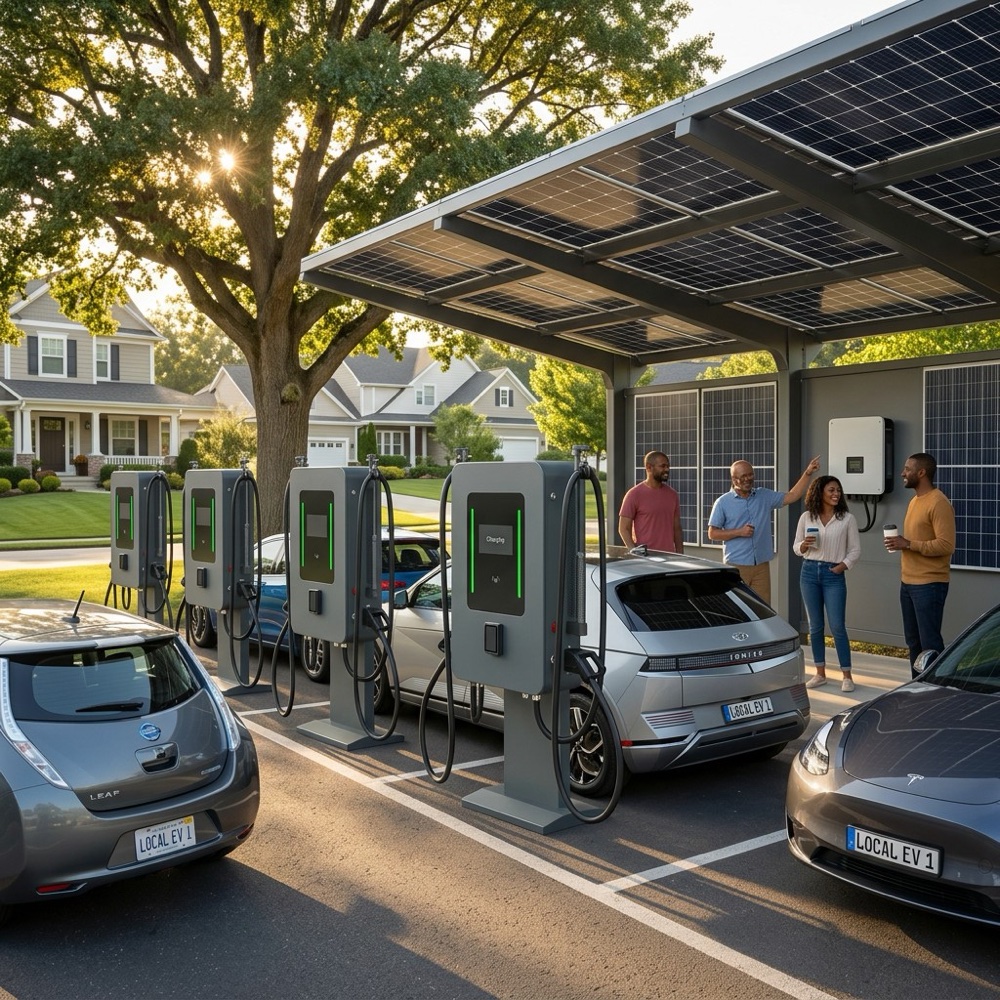
The Interoperability Problem OCPP Was Built to Solve
An EV charging network is a distributed system with a notoriously heterogeneous parts list: chargers from multiple manufacturers, charge point management software (CSMS) from operators or third parties, roaming hubs, utility demand-response platforms, and increasingly the vehicles themselves. Without a common language between the charger and the network backend, every integration becomes a custom engineering project, every firmware release a compatibility risk, and every network expansion a renegotiation with a single vendor.
The Open Charge Point Protocol (OCPP) was created to standardize exactly that charger-to-network link. Maintained by the Open Charge Alliance, OCPP has been the de facto industry baseline since the 1.5/1.6 generation, with OCPP 1.6J — the JSON-over-WebSocket variant — adopted by the overwhelming majority of commercial EVSE worldwide. For a decade, 1.6J worked well enough: it standardized session start and stop, metering values, and basic remote control. But it was written before security threats, smart charging mandates, and Plug & Charge were on the industry’s radar, and its architectural limits are now colliding with market requirements.
The most consequential gaps are well documented. Transport security was optional — most deployed 1.6J networks communicate over unencrypted WebSocket, leaving session data and control commands exposed to interception. Firmware updates were unsigned, meaning a compromised update server could push malicious code to every charger in a fleet. Smart charging profiles were coarse and implemented inconsistently across vendors. And there was no device model at all: each manufacturer invented its own configuration namespace, so a mixed-vendor network required bespoke adapters for the simplest remote settings.
What OCPP 2.0.1 Delivers — and Why It Changes Procurement
OCPP 2.0.1, released by the Open Charge Alliance and refined through 2.0.1 patch releases, is a ground-up redesign rather than a version bump. Four capability areas matter most to B2B buyers, because each one maps directly to a cost or a compliance obligation.
Security as a First-Class Feature
Where 1.6J treated security as an afterthought, 2.0.1 mandates it. Transport is TLS 1.2/1.3 with optional mutual authentication, so both the charger and the backend verify each other’s identity. Firmware updates must be digitally signed and verified before installation. The protocol adds a full security event model — connection losses, certificate changes, failed authentication attempts — that is logged and audit-ready. For network operators facing insurer questionnaires, public funding conditions, or the EU Cyber Resilience Act’s timelines, this is not a nice-to-have; it is the difference between passing and failing a procurement security review.
ISO 15118 Plug & Charge
Plug & Charge lets the vehicle authenticate to the charging infrastructure using its own certificates, triggering authorization and payment without a card, APP, or QR code. The driver plugs in, and the session starts. This capability requires the charging station to relay ISO 15118 certificate and authorization messages to the backend — a data flow that OCPP 2.0.1 formalizes through its certificate management and DataTransfer mechanisms. For fleets with many vehicles and for roaming-heavy public networks, Plug & Charge removes the single largest source of session friction and support cost.
Standardized Smart Charging
OCPP 2.0.1 introduces a coherent SmartCharging message set — charging profiles that specify current, time, and energy limits in a machine-readable, vendor-neutral format. This is the technical foundation for dynamic load balancing, time-of-use optimization, demand response, and grid services. In a dual-gun wallbox deployment, standardized profiles let a site controller arbitrate power between two vehicles and across a building’s total load with one consistent mechanism, regardless of which vendor supplied the hardware.
Device Model and Observability
The 2.0.1 device model replaces the free-form configuration keys of 1.6J with a structured, discoverable model. Chargers expose variables — power module temperature, connector state, metering registers, uptime — in a uniform way that any compliant CSMS can read and write. The operational payoff is large: diagnostics, reset, and update workflows are standardized, which measurably lowers the cost of managing a mixed-vendor estate and shortens mean time to repair.
OCPP 1.6J vs OCPP 2.0.1: What Has Actually Changed
| Capability | OCPP 1.6J | OCPP 2.0.1 |
|---|---|---|
| Transport security | Optional; plain WebSocket common in the field | TLS 1.2/1.3 mandatory; mutual authentication supported |
| Firmware update integrity | Unsigned downloads | Signed firmware with verified installation |
| Plug & Charge (ISO 15118) | Not supported | Native certificate management and authorization flows |
| Smart charging profiles | Coarse, inconsistently implemented | Standardized SmartCharging message set |
| Device model | None; vendor-specific configuration keys | Structured, machine-readable device model |
| Security events and logging | Minimal | Full event log, audit-ready |
| Diagnostics and station management | Basic remote commands | Standardized diagnostics, reset, and update flows |
| Regulatory alignment | Legacy baseline | Matches AFIR and modern cybersecurity expectations |
Why Regulators Are Turning 2.0.1 Features into Mandates
The regulatory shift is what moves OCPP 2.0.1 from “good practice” to “mandatory.” The EU’s AFIR requires that publicly accessible charging points support smart charging functionality and, where applicable, demand response, and it anchors interoperability in open protocols including OCPP and ISO 15118. In the United States, the National Electric Vehicle Infrastructure (NEVI) program conditions federal funding on open, standards-based communication, and California’s smart charging rules push load management and grid-interactive behavior for commercial chargers. Meanwhile, cybersecurity legislation in the EU and elsewhere is making unauthenticated, unencrypted charging networks a liability risk that operators and their insurers are unwilling to carry.
The practical consequence: tenders for public, fleet, and workplace charging in 2026 routinely list OCPP 2.0.1 as a scored or pass-fail requirement. Hardware that ships with 1.6J firmware and no upgrade path is increasingly difficult to place — not because it cannot charge vehicles, but because it cannot meet the compliance and audit obligations attached to the sites where it would be deployed. Commercial charging hardware such as the OCPP 1.6J dual-connector wall-mounted EVSE for car parks remains a sound transitional choice for private estates, but public and regulated deployments should be specified on 2.0.1-ready controllers from day one.
The Migration Reality: From 1.6J to 2.0.1
Because both protocol generations run over the same WebSocket transport, migration for capable hardware is a firmware and backend exercise rather than a hardware replacement — provided the charger’s controller has sufficient processing power, memory, and a genuine 2.0.1 firmware commitment from the manufacturer. A typical migration plan proceeds in phases: first, upgrade the CSMS to a platform that supports both protocol versions; second, pilot one site or one charger, validating session start, metering, and security handshakes; third, roll out in waves, because a 1.6J and a 2.0.1 endpoint cannot share a single protocol connection.
Operators evaluating dual-gun wallboxes for new sites should ask three questions in writing: does this controller support OCPP 2.0.1 now or via OTA within a defined window; is the backend contract agnostic to protocol version; and does the vendor commit to signed firmware and TLS in the delivered configuration? The smart commercial dual-gun wall-mounted DC fast charging stations and the OCPP smart-network dual-gun charging piles for public facilities in MIDA’s commercial range illustrate the hardware class that carries this upgrade path — network-ready controllers, remote management, and dual connectors that keep utilization high while the protocol layer evolves.
What to Specify in Your 2026 Charger RFP
The following checklist converts this analysis into procurement language. Every item should appear verbatim in the tender specification:
- Protocol: OCPP 2.0.1 compliance with documented backward compatibility to 1.6J during transition.
- Transport security: TLS 1.2/1.3 with certificate management, enabled by default.
- Firmware integrity: Signed firmware updates with verifiable installation and rollback.
- Plug & Charge: ISO 15118-2 certificate handling on the station, validated against a major CSMS.
- Smart charging: OCPP 2.0.1 SmartCharging profiles demonstrated with a live load-balancing scenario.
- Device model: Full device model support with vendor documentation of exposed variables.
- Roaming: OCPI or equivalent integration tested with a roaming platform.
- Longevity: A written five-year firmware and security-update commitment with defined service levels.
For operators upgrading existing estates rather than building new ones, the factory-grade OCPP smart EVSE fast charging stations and the OCPP-enabled mini dual-gun DC fast charging stations provide the networking foundation for a staged protocol migration without sacrificing throughput or site footprint.
Frequently Asked Questions
Q1. Is OCPP 2.0.1 backward compatible with OCPP 1.6J?
Not on a single connection. A charger and its CSMS must negotiate one protocol version per connection, so 1.6J and 2.0.1 assets require a backend that supports both and routes each charger accordingly.
Q2. Can existing 1.6J chargers be upgraded to OCPP 2.0.1?
Often yes, via firmware, provided the controller has sufficient processing power and memory and the manufacturer offers a genuine 2.0.1 build. Older or low-spec controllers may not qualify, so verify the upgrade path in writing before procurement.
Q3. Do I need Plug & Charge to comply with AFIR or NEVI?
AFIR mandates smart charging and open interoperability rather than Plug & Charge specifically, but Plug & Charge-capable hardware is increasingly scored in tenders because it reduces friction and support cost. Specifying ISO 15118 readiness is a low-cost hedge.
Q4. Is OCPP 2.0.1 the same thing as ISO 15118?
No. OCPP manages the charger-to-network link, while ISO 15118 manages the vehicle-to-charger link (including Plug & Charge). OCPP 2.0.1 provides the message and certificate handling that lets ISO 15118 flows reach the backend.
Q5. Which charge point management systems support OCPP 2.0.1?
All major CSMS platforms now offer 2.0.1 support, and most support mixed estates of 1.6J and 2.0.1 during migration. Confirm the specific version and feature coverage (Plug & Charge, SmartCharging) in your contract.
Q6. Does OCPP 2.0.1 improve roaming between networks?
Indirectly, yes. Its cleaner transaction and certificate flows reduce roaming reconciliation errors, and operators typically pair OCPP 2.0.1 with OCPI for hub-to-hub roaming.
Q7. Will buying 1.6J hardware today hurt resale or residual value?
For public and regulated sites, yes — 1.6J-only hardware is already excluded from some tenders. For private estates, it remains serviceable, but a documented upgrade path to 2.0.1 protects value and keeps options open.
Post time: Sep-01-2026