
Circular Economy and Second-Life Batteries: Repurposing EV Batteries for Static Storage Charging Stations
Quick Answer
When an EV battery reaches roughly 70–80% state of health (SOH), it is retired from automotive duty but still holds substantial usable capacity — and that capacity is valuable when repurposed as static storage co-located with DC fast charging stations. A second-life battery system buffers energy at the charger site, enabling peak shaving, transformer deferral, higher charger utilization on weak grid connections, and participation in demand response. Global second-life supply is projected to exceed 200 GWh by 2030 as early electric fleets retire, creating a genuine feedstock for stationary storage. Safety and performance are governed by screening and grading standards such as UL 1974 and the emerging IEC 63338, which define how retired packs are tested, sorted, and reconfigured. This article explains the repurposing chain, the buffer-storage architecture that maximizes charger throughput, the economics versus new battery storage, and the circular-design practices that make the whole system viable through 2030.
Key Takeaways
- A battery retired at 70–80% SOH retains years of stationary service life, and global second-life supply is forecast to exceed 200 GWh by 2030 as early EV fleets retire.
- Second-life storage co-located with DC fast chargers converts weak grid connections into high-throughput sites: it enables peak shaving, transformer deferral, and consistent 80–100% charger utilization during demand spikes.
- The repurposing chain has five stages — collection, screening, grading, reconfiguration, and certification — with UL 1974 and IEC 63338 defining safety and performance requirements.
- Second-life systems cost 30–60% less than new battery storage on upfront capex, but require conservative state-of-charge windows and thermal management to hit a 5–10 year stationary service life.
- Regulatory recognition of second-life storage in grid services, carbon accounting, and extended producer responsibility (EPR) schemes is expanding and will shape the 2026–2030 economics.
The Second-Life Opportunity: A Fleet of Retiring Batteries
The circular economy case for second-life batteries starts with arithmetic. Automotive traction batteries are typically retired when usable capacity falls to 70–80% of original, a threshold driven by range anxiety and warranty obligations, not by physical failure. A 60 kWh pack retired at 75% SOH still contains roughly 45 kWh of working energy — enough to power a home for days or to buffer a fast charger through its daily peak for years. As the first large wave of electric vehicles — especially fleet vehicles with high cycle counts — reaches retirement age between 2026 and 2030, the available feedstock is becoming material rather than anecdotal. Analysts project cumulative second-life supply exceeding 200 GWh by 2030, which at stationary storage costs would represent tens of billions of dollars of repurposed asset value if the industry builds the collection and repurposing chain in time.
The strategic logic for charge point operators is equally direct. Fast charging demand is spiky: a site may draw near-zero power for hours, then need 200–600 kW for short bursts as vehicles arrive. Utilities bill on peak demand, and grid connections are sized for those peaks. A second-life buffer that charges slowly during off-peak hours and discharges into the charger during peaks smooths the site’s load profile, avoids expensive transformer upgrades, and lets operators install more charge points on the same connection. In markets with time-of-use tariffs or demand response programs, the storage asset becomes an earning asset rather than a cost center.
How Second-Life Storage Integrates with DC Fast Charging Stations
The integration pattern that delivers the most value is the DC-coupled or hybrid buffer architecture, in which the storage system sits between the grid connection and the charger’s DC bus or alongside the AC input.
Peak Shaving and Transformer Deferral
The primary business case in most markets is peak shaving. A typical public site with two 80–120 kW chargers needs a connection sized for the simultaneous worst case. With a 100–200 kWh second-life buffer, the site can be connected at a fraction of that capacity: the buffer absorbs the difference, discharging during the 15–40 minute charging peaks and recharging slowly from the grid overnight or between sessions. The payoff is concrete — avoiding a transformer upgrade that can cost USD 50,000–150,000 and take months of utility lead time — and in many cases the storage system pays for itself by enabling the site to exist at all.
Utilization and Throughput on Weak Grids
On sites with limited grid capacity — rural corridors, older commercial districts, or island grids — storage is the difference between a 50 kW connection and a 150 kW charging experience. A buffer storage system lets operators deliver high-power sessions even when the utility connection is small, improving charger utilization and driver satisfaction while keeping the site within its contracted capacity. This is the configuration that makes electrification viable in regions where grid reinforcement is slow or expensive.
Demand Response and Energy Arbitrage
Because second-life packs retain healthy charge/discharge capability in the 0.3–1C range, they can participate in demand response events and shift energy purchases to low-tariff windows. A site operator with a 150 kWh buffer can reduce monthly energy spend by 10–20% in time-of-use markets, and can monetize flexibility in markets with explicit capacity or flexibility payments. The revenue stack — peak shaving, arbitrage, demand response, and resilience backup — is what moves second-life projects from experimental to bankable.
The Repurposing Chain: From Vehicle to Station
Repurposing is a manufacturing discipline, not a recycling afterthought. The chain has five stages, each with its own quality gates.
Collection and Diagnostics
Retired packs arrive from OEM service networks, fleet operators, and insurers. Each pack receives an initial health screen — voltage, temperature, insulation resistance, and capacity at partial discharge — to triage packs suitable for second life versus those that should proceed directly to material recycling.
Screening and Grading per UL 1974 and IEC 63338
UL 1974 (and the emerging IEC 63338 standard) define how modules and packs are screened, tested, and rated for stationary use: capacity verification, cell-balance assessment, self-discharge measurement, and thermal characterization. Packs are graded into tiers — for example, Grade A for high-throughput storage and load balancing, Grade B for slower, lower-cycle applications such as behind-the-meter time shifting. Grading protects both safety and economics, because a pack operating within its verified envelope is far more predictable than a pack pushed beyond it.
Reconfiguration and Battery Management
Selected modules are recombined into stationary battery systems with a purpose-built battery management system (BMS) that enforces conservative operating windows — typically 20–80% state of charge — to extend calendar life. Thermal management, enclosure, and protection systems are designed for the stationary environment, and the whole assembly is tested to stationary safety standards before deployment.
Certification and Monitoring
Deployed systems must be certified to the relevant stationary storage standards (for example IEC 62619 for industrial batteries and IEC 62477 for power conversion) and connected to a monitoring platform that tracks SOH, cycle count, and temperature drift. Continuous monitoring matters because second-life packs age unevenly; early anomaly detection is the difference between a 8-year asset and a warranty claim.
Second-Life vs. New Battery Storage: A Comparison Table
| Dimension | Second-Life Battery Storage | New Battery Storage (LFP/NMC) |
|---|---|---|
| Upfront capex | 30–60% lower per kWh than new | Full market price; falling ~5–10% per year |
| Remaining service life | 5–10 years at conservative operating windows | 10–15+ years at rated duty |
| Cycle capability | Limited by residual cycle life; best at 0.3–1C | High; designed for 6,000–10,000+ cycles |
| Energy density | Lower; more floor space per kWh | Higher; denser installations |
| Performance variability | Higher pack-to-pack variance; needs grading and monitoring | Low variance; factory-matched |
| Safety certification | UL 1974 / IEC 63338 screening plus stationary standards | Standard stationary certifications from day one |
| Sustainability impact | Extends asset life, defers recycling, cuts embodied carbon per kWh-served | New material demand; recycling at end of life |
| Best-fit use case | Peak shaving, transformer deferral, buffer storage at charger sites | High-cycle arbitrage, grid-scale services, mission-critical backup |
| Warranty certainty | Limited or performance-based warranties | Full 10-year+ manufacturer warranties |
The table frames the decision rule: second-life storage wins wherever the duty cycle is moderate and the capital constraint is tight — precisely the profile of a co-located charging buffer. New storage retains the advantage for high-cycle arbitrage and applications where performance certainty is non-negotiable.
Economics, Policy, and the Circular Roadmap to 2030
Three forces are moving second-life projects from pilot to portfolio. First, cost: at 30–60% lower upfront capex and with levelized storage costs competitive in peak-shaving duty, the payback period for a charger-site buffer typically lands in the 3–6 year range depending on tariff structure and utilization. Second, regulation: the EU Battery Regulation and similar frameworks are embedding repurposing in extended producer responsibility, while several markets now recognize second-life storage in grid-interconnection and flexibility programs — a recognition that removes the largest regulatory friction. Third, data: OEMs and repurposers are sharing richer health data, and digital battery passports are making residual-value assessment transparent enough to underwrite performance-based contracts.
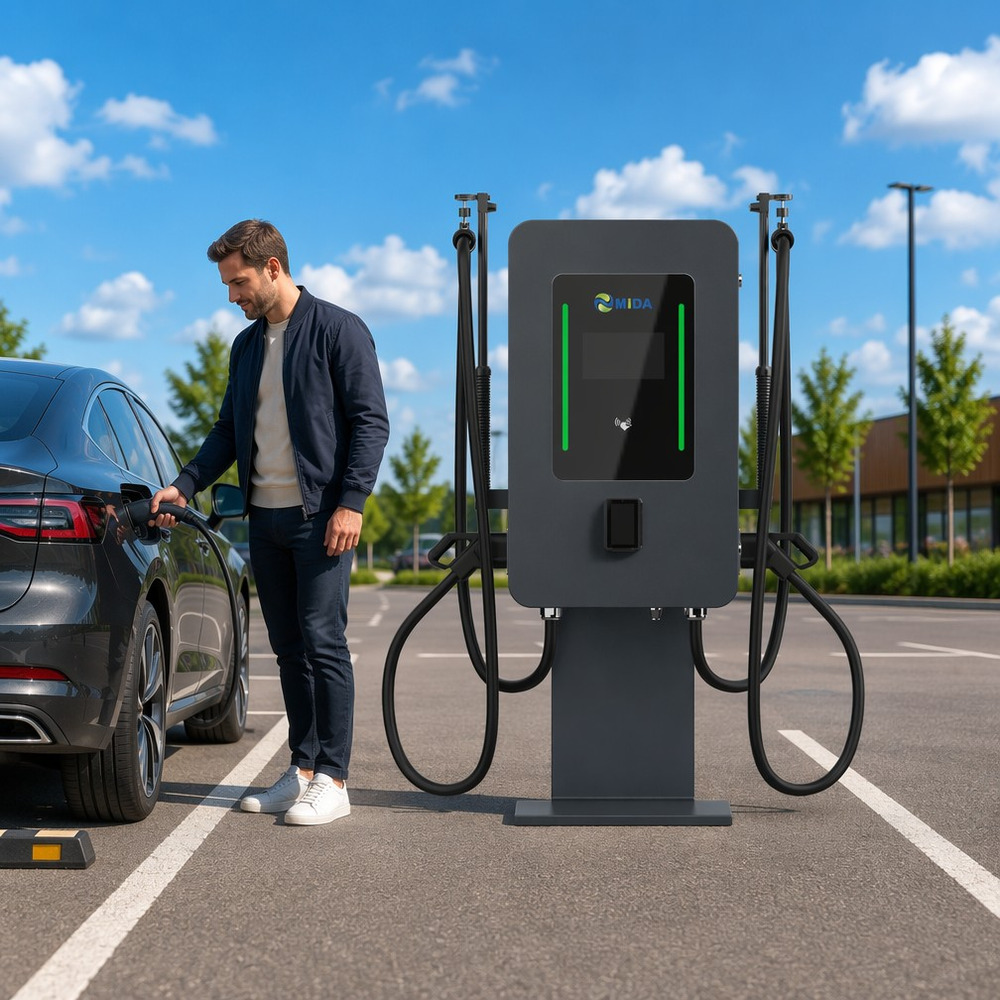
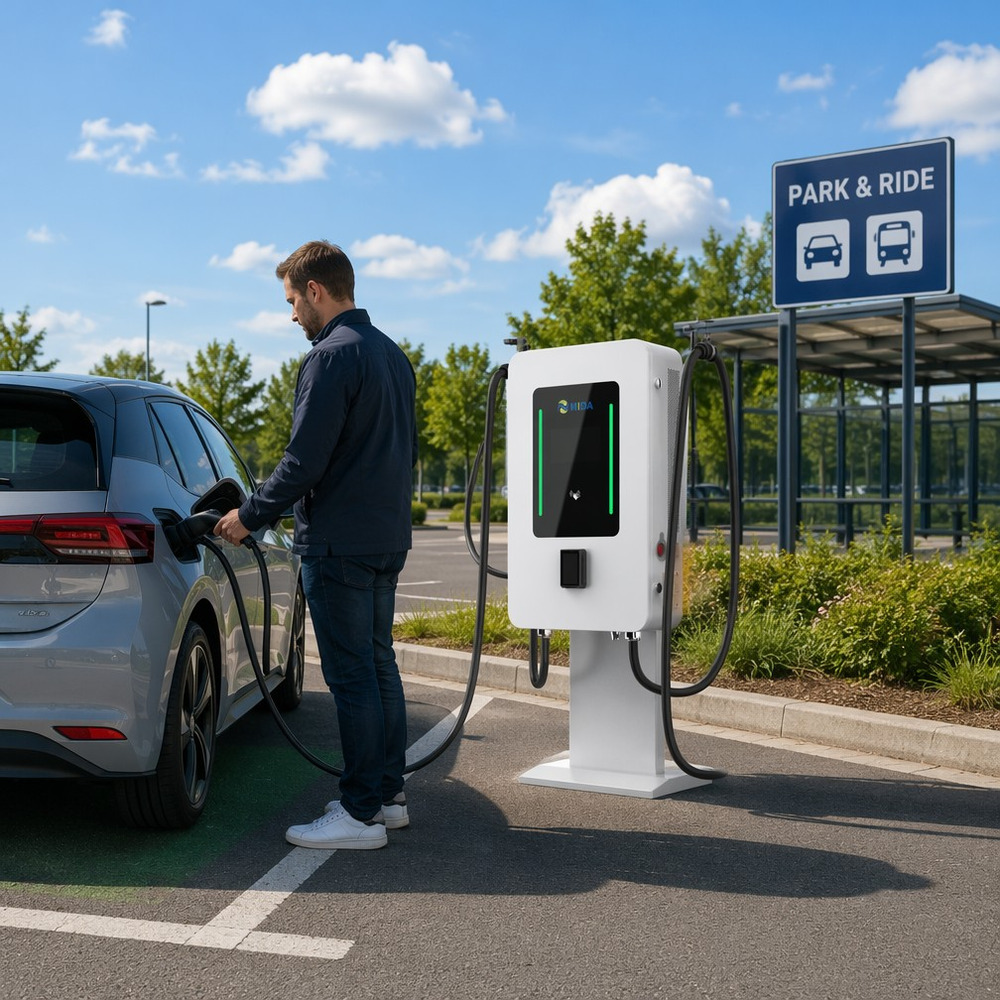
The circular strategy has a hardware corollary: storage-integrated charging sites need charge points that communicate with the energy management system and tolerate the load shapes that buffered operation creates. Dual-gun EV wallbox fast charging stations with intelligent load balancing are the natural complement to a second-life buffer, coordinating power sharing between the grid feed and stored energy. OCPP smart network dual-gun wall-mounted DC fast charging stations give the site operator the telemetry needed to monitor storage-charger coordination, while APP-monitored 80kW dual-gun wallbox DC fast charging stations bring the visibility operators need to tune charging windows against storage state of charge. Commercial-grade 80kW dual-gun wallbox DC fast chargers with a 150–1000V range flex with the voltage dynamics of buffered operation, and OCPP 1.6J dual-connector wall-mounted DC fast charging stations for car parks keep multi-vehicle sites running efficiently while the storage asset handles the grid side of the equation.
Frequently Asked Questions
Q1. At what state of health is an EV battery retired from a vehicle?
Most OEMs and fleet operators retire traction batteries when usable capacity falls to roughly 70–80% of original SOH, driven by range and warranty considerations. At 75% SOH, a typical 60 kWh pack still stores roughly 45 kWh of working energy — ample for stationary buffer duty.
Q2. How long do second-life batteries last in stationary storage?
With conservative operating windows (typically 20–80% state of charge), controlled temperatures, and moderate cycle rates, second-life packs commonly deliver 5–10 additional years of service. Actual life depends on the pack’s residual health grade, ambient conditions, and duty cycle.
Q3. Are second-life batteries safe for charging-station storage?
Yes, when the repurposing chain follows the standards: screening and grading per UL 1974 / IEC 63338, reconfiguration with a purpose-built BMS, thermal management, and certification to stationary storage standards such as IEC 62619. Safety risk is managed by operating the pack within its verified envelope and by continuous monitoring.
Q4. How much cheaper is second-life storage than new batteries?
Upfront capex is typically 30–60% lower per kWh than new battery storage. The trade-off is a shorter and more variable service life, so the economics favor applications with moderate duty cycles — exactly the peak-shaving and buffer role at DC fast charging sites.
Q5. What is the difference between UL 1974 and IEC 63338?
UL 1974 is the established North American standard for the repurposing process — screening, grading, and safety evaluation of retired batteries for stationary applications. IEC 63338 is the emerging international standard harmonizing repurposing and reuse requirements; together they define the quality gates for second-life deployment worldwide.
Q6. Can a second-life battery system increase charger power without a grid upgrade?
Yes. A buffer storage system can deliver power into the charger during peak sessions that exceeds the grid connection’s rating, because the battery discharges during peaks and recharges slowly between sessions. This is the transformer-deferral case that makes high-power charging viable on weak connections.
Q7. Do second-life batteries qualify for grid flexibility and demand response programs?
Increasingly yes. Several markets now recognize second-life storage in interconnection and flexibility frameworks, and the EU Battery Regulation embeds repurposing in extended producer responsibility. Qualification varies by market, so site developers should confirm local recognition before underwriting revenue from flexibility programs.
Post time: Sep-01-2026