
Quick Answer
The fastest way to solve a grid capacity limit is not a bigger grid connection — it is software and storage. Dynamic Load Balancing (DLB) continuously monitors a site’s available power and distributes it across active chargers, so a 100 kW grid connection can support staggered 150–350 kW charging sessions without tripping the main breaker. Adding a battery energy storage system (BESS) with peak shaving absorbs demand spikes and typically unlocks 30–80% more effective charging capacity on the same connection while cutting utility demand charges by 20–40%. Only when sustained, simultaneous high-power sessions are genuinely unavoidable should operators invest in a transformer upgrade, which typically costs $50,000–$500,000 and takes 12–24 months. The most capital-efficient sequence is: audit the site, deploy DLB first, add BESS for the residual peak, then consider PV or grid reinforcement.
Key Takeaways
- DLB is the first lever: it reallocates existing site capacity in real time, so staggered charging sessions rarely require a grid upgrade.
- BESS with peak shaving is the second lever: batteries shave demand spikes, cut demand charges by 20–40%, and can unlock 30–80% more effective capacity.
- On-site solar adds capacity at peak times but only where the load profile and solar irradiance align.
- Grid upgrades are the last resort: $50,000–$500,000 capex and 12–24 months of lead time make them the slowest, most expensive option.
- A phased roadmap minimizes risk: audit → DLB → BESS → PV → grid upgrade, with each step validated by metering data before the next.
Why Grid Capacity Is the Real Bottleneck for DC Fast Charging
Most DC fast charging projects are approved, permitted, and funded — then stalled at the grid connection. The utility transformer that feeds a typical commercial site — a shopping center, hotel, fleet depot, or highway service area — was sized years ago for lighting, HVAC, and retail loads, not for 150–350 kW charging sessions. A single 350 kW ultra-fast charger can require roughly 500 kVA of transformer capacity at peak, which can exceed the entire site connection of a small commercial property.
The constraint is rarely “no power exists nearby.” It is that the local network can deliver only a finite amount, and the operator’s requested connection point is already near its limit. Utilities respond with one of three outcomes: a reduced connection offer, a demand charge structure that penalizes the operator’s peak usage, or a requirement to fund network reinforcement. All three outcomes land on the project’s economics, and all three can be mitigated before a single transformer is upgraded.
Two cost mechanisms make the problem worse. The first is the connection fee and reinforcement charge, which can run from tens of thousands to hundreds of thousands of dollars depending on transformer distance and network congestion. The second is the demand charge: most commercial tariffs bill the highest 15-minute average power draw each month at $10–$20 per kW. A charging plaza that pulls 300 kW for one hour pays for 300 kW of demand all month — roughly $3,000–$6,000 in demand charges alone — even if average usage is a fraction of that figure. Solving capacity therefore means solving peaks, and that is a load-management and storage problem, not purely a grid problem.
The Four Levers for Closing the Capacity Gap
Operators have four tools, ordered here by capital cost and lead time:
- Dynamic Load Balancing (DLB) — software and control hardware that fit more charging into existing capacity.
- Battery energy storage with peak shaving — hardware that absorbs the peaks DLB cannot smooth.
- On-site solar generation — generation that adds capacity when the sun and the demand profile align.
- Utility grid upgrade — the expensive, slow, but sometimes necessary final option.
The correct answer for most sites is a combination, not a single lever. The sections below explain when each applies and what it delivers.
Lever 1: Dynamic Load Balancing (DLB) — Software That Fits More Power Into the Same Grid
Dynamic load balancing makes the existing grid connection behave as if it were larger. A DLB controller continuously reads the site’s real power consumption — from CT clamps at the main intake and from each charger — and compares it against a configured site limit. When a building load (HVAC, lighting, or a neighboring tenant) draws power, the controller reduces charger output to stay under the limit. When the building load drops, the chargers ramp back up. Charging sessions that would trip a fixed-limit setup simply proceed at slightly reduced power for a few minutes.
The economics are decisive. A site with a 200 kVA connection and a 300 kW peak demand from two fast chargers cannot run both at full power simultaneously — but most sessions are staggered, and DLB exploits exactly that. Utilization gains of 20–50% are typical on the same connection, with zero transformer capex. DLB also protects against blackouts: the controller’s hard site limit guarantees the main breaker never trips, which protects the operator from nuisance outages and from the utility’s penalty structures.
Prioritization makes DLB practical in mixed-use sites. The controller can be programmed so that a vehicle that arrived first, or a fleet vehicle on a tight schedule, receives the power while a second vehicle’s session throttles gracefully. MIDA Power’s dynamic load balancing and BESS optimization architecture describes this control hierarchy in detail, and the 120kW/240kW GBT DC fast charger with Dynamic Load Balancing demonstrates it in a shopping-center deployment, where the station holds a configurable “Total Site Limit” and shares power with the building’s own loads.
Lever 2: Battery Energy Storage and Peak Shaving
Peak shaving with a battery converts the grid constraint from a hard limit into a manageable average. The BESS charges from the grid during low-demand hours — typically overnight, when energy is cheap — and discharges during charging peaks, covering the difference between what the grid can deliver and what the vehicles demand. The site’s maximum 15-minute draw from the utility falls, demand charges fall with it, and the chargers get the power they need from the battery instead of from the transformer.
A concrete example: a site with a 200 kVA connection installs three 150 kW chargers with a 200 kWh / 150 kW BESS. During a morning rush, two vehicles draw 150 kW each while the building draws 50 kW. Without storage, the site would need 350 kW. With the BESS covering 150 kW of that demand, the utility sees 200 kW — exactly the connection limit — and the charging session completes at full speed. At $15/kW demand charge, shaving 150 kW of peak saves $2,250 per month, roughly a 30–40% demand-charge reduction, with battery payback typically landing between two and four years depending on local tariffs and session patterns.
Peak shaving is also a resilience play. A BESS can power chargers through brief grid outages, support black-start scenarios, and — in markets with time-of-use rates — arbitrage cheap off-peak energy into premium peak-hour charging. When paired with DLB, the two systems divide the work cleanly: DLB handles steady-state allocation, and the BESS covers short-duration peaks that exceed the site limit. MIDA Power’s grid resilience and load balancing deployments show this combination in 90–180 kW hub configurations.
Lever 3: On-Site Solar Generation
Solar adds capacity exactly when EV demand peaks at many commercial sites — midday, when retail, office, and highway rest-stop traffic is highest. A 100 kWp rooftop array can offset a meaningful share of a charging plaza’s daytime draw, effectively increasing the usable capacity of a fixed grid connection during the sunniest hours. In markets with net metering or export tariffs, excess generation during off-peak charging hours earns credit against the site’s energy bill.
Solar is not a standalone solution for grid-constrained sites. Charging demand is not confined to daylight hours, and fleet depots frequently charge overnight. The realistic role of PV is to reduce the energy cost and the grid draw of the daytime portion of the load, which in turn shrinks the BESS size needed to cover residual peaks. Sites should model their actual session profile against local solar irradiance before committing to PV sizing; a rule of thumb is to size PV to cover 50–70% of the site’s daytime charging energy and let the BESS and DLB handle the rest.
Lever 4: Utility Grid Upgrades — When You Have No Other Choice
Transformer and service upgrades are the highest-cost, longest-lead-time lever, and they should be the last option evaluated. A service upgrade from 200 kVA to 500 kVA can cost $50,000–$500,000 depending on transformer availability, distance to the substation, and local reinforcement requirements, with lead times of 12–24 months and no guarantee the utility will fund any of it. In congested networks, the queue alone can push a project out by years.
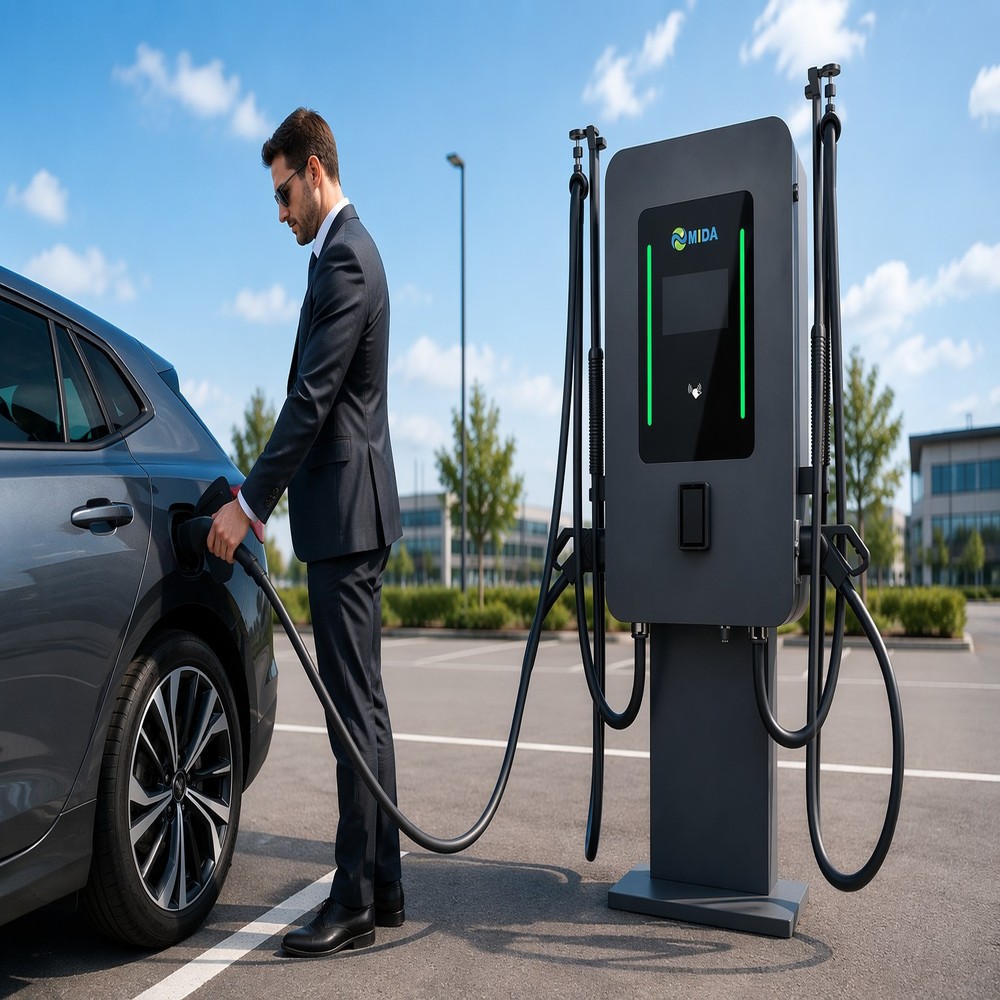
Upgrades are justified in exactly two situations. The first is guaranteed simultaneous high-power demand: fleet depots where a dozen trucks must charge overnight on a tight schedule cannot wait for staggered sessions, and the business case for the upgrade is the fleet’s revenue. The second is regulatory or contractual requirements that force full-power availability — for example, highway fast-charging concessions with uptime and power commitments. Even in these cases, the upgraded connection should be paired with DLB from day one, so the operator does not pay demand charges on idle capacity.
Comparing the Four Levers
The table below summarizes the four approaches by capital cost, lead time, capacity unlocked, and impact on demand charges. Use it as a first-pass filter; site-specific metering data should refine the numbers.
| Lever | Typical capex | Lead time | Capacity unlocked on same connection | Demand charge impact | Complexity |
|---|---|---|---|---|---|
| Grid upgrade | $50,000–$500,000+ | 12–24 months | Full (new connection limit) | None (but higher base capacity) | High — utility dependency |
| DLB (software + controller) | $2,000–$20,000 | Days–weeks | 20–50% utilization gain | Moderate reduction via peak avoidance | Low–medium |
| DLB + BESS peak shaving | $30,000–$150,000 | 1–3 months | 30–80% | 20–40% reduction | Medium |
| PV + BESS | $50,000–$200,000 | 2–6 months | Seasonal boost, daytime only | Up to 40% reduction with time-of-use rates | High |
Three patterns emerge. DLB is the only lever that costs less than the connector hardware on the same charger and pays back in weeks. DLB plus BESS is the highest-value combination for sites with real demand spikes, delivering the capacity unlock of an upgrade at a fraction of the cost. And PV is a tariff optimization tool as much as a capacity tool — valuable, but rarely sufficient on its own for a grid-constrained site.
A Phased Roadmap for Site Owners
Treat grid capacity as a staged problem and phase the investment. Each stage generates data that validates or rejects the next.
- Audit the site. Collect one month of real load data: CT logs at the main intake, charger session curves, and the utility tariff structure. The audit answers the first question — is the constraint a hard capacity limit, a demand-charge problem, or both?
- Deploy DLB first. It is the cheapest lever, installs in days, and immediately stops breaker trips. Configure the site limit, set prioritization rules, and measure utilization gains. MIDA’s 60kW DC charger station with Ethernet and DLB shows how DLB integrates at the station level with remote monitoring.
- Size and add BESS for the residual peak. With DLB smoothing steady-state allocation, the remaining spikes define the battery’s power and energy requirements. Target the worst-case 15-minute peak; oversizing a battery by 50% rarely pays back.
- Add PV where the profile supports it. Model the daytime charging load against local irradiance and tariff export rates before committing capital.
- Revisit the grid upgrade only with evidence. If the audit-plus-DLB-plus-storage model still cannot serve guaranteed simultaneous sessions, the upgrade is justified — and the DLB stays in place to protect the new connection from demand charges.
Common Mistakes to Avoid
Most grid-capacity failures are self-inflicted specification errors. Five mistakes account for the majority of costly rework.
- Oversizing chargers without load management. Installing 350 kW chargers on a 250 kVA connection without DLB guarantees breaker trips. Size the charger fleet to the business case, and let DLB arbitrate the grid.
- Ignoring demand charges in the business model. A station that “works” electrically can still lose money monthly on a 300 kW demand peak. Model the tariff before signing the connection agreement.
- No prioritization policy. Without rules, DLB throttles vehicles in arrival order, which frustrates fleet operators on tight schedules. Define priority classes in the controller configuration.
- Undersized batteries. A battery that covers 60% of the peak still leaves the site exposed to the tariff’s most expensive 15 minutes. Size to the worst-case spike, not the average.
- Skipping the metering audit. Designing DLB and BESS settings without real load data is guesswork. The audit is the cheapest insurance in the entire project.
FAQ
1. What is dynamic load balancing (DLB) for EV charging?
Dynamic load balancing is a control system that continuously monitors a site’s total power consumption and distributes available capacity across active chargers in real time. It keeps the site under its grid limit while maximizing charging throughput, and it can prioritize specific vehicles or charger bays.
2. How much does a grid capacity upgrade cost for a DC fast charger?
Service and transformer upgrades typically cost $50,000–$500,000 depending on the existing connection, distance to the substation, and local network conditions, with lead times of 12–24 months. DLB and battery storage usually deliver the same effective capacity for a fraction of this cost.
3. What is peak shaving and how does it lower charging costs?
Peak shaving uses a battery to discharge during the site’s highest demand periods, reducing the peak 15-minute draw the utility bills on. Because commercial tariffs charge $10–$20 per kW of peak demand, shaving a 150 kW spike can save $1,500–$3,000 per month.
4. Can I run a 350 kW DC charger on a 100 kW grid connection?
Not at full power continuously, but in practice yes with the right system: DLB throttles the charger to available capacity, and a BESS can supply the difference during peak sessions. Sustained simultaneous 350 kW sessions still require a grid upgrade.
5. How long does a utility transformer upgrade take?
Typical lead times are 12–24 months from application to energization, including design, permitting, and network reinforcement work. In congested networks the queue can extend the timeline further, which is why storage and load management are usually deployed first.
6. Does every DC fast charging site need a battery?
No. Sites with staggered session patterns and modest demand charges can often solve the problem with DLB alone. Batteries add value where demand spikes are real, demand charges are high, or grid resilience is required — the BESS business case should be built from metered data, not assumptions.
7. How does MIDA’s DLB decide which vehicle gets power first?
MIDA’s DLB controllers support configurable prioritization policies — first-come-first-served, fleet priority, or session-based rules — and enforce a hard “Total Site Limit” that protects the main breaker. The station-level logic is described in MIDA’s 120kW/240kW DLB deployment documentation, and the full product range is listed on the MIDA Power products page.
Post time: Aug-18-2026