
60kw 80kw 120kW Dual-Output DC Fast Charger OCPP2.0 for Commercial Use
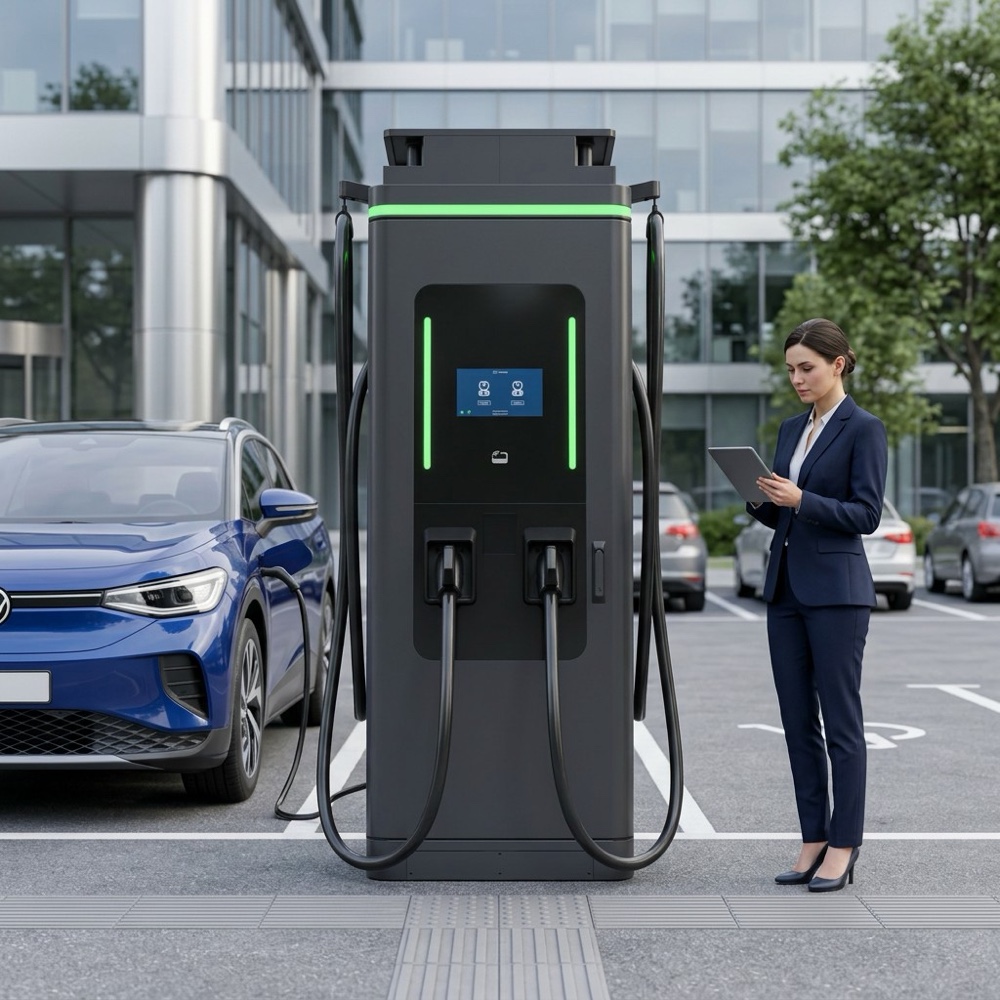
MD-EU 60/80/120kW Dual-Output DC Fast Charger
1. Product Overview
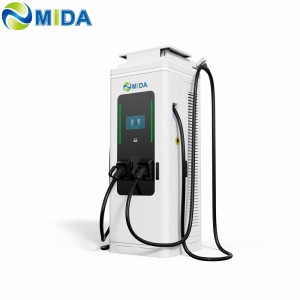
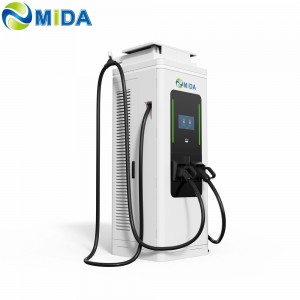
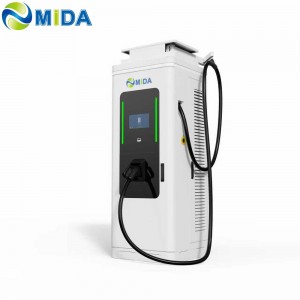
The MD-EU 60/80/120kW is a dual-output DC fast charger engineered for commercial charging environments that need genuine speed without oversized cabinets, excessive floor space or unnecessary cost. One hardware platform, three selectable power ratings of 60kW, 80kW and 120kW, lets a site operator right-size the installation today and activate additional power later as demand grows, protecting the investment across the full lifetime of the asset. Two independent outputs mean two electric vehicles can charge at the same time, so the station works as hard as the drivers who rely on it.
Input compatibility is straightforward. The charger connects to a standard 400Vac ±10% three-phase supply and delivers regulated DC power across the full 200–1000Vdc output window. That voltage range covers today’s 400V-class passenger electric vehicles and the new wave of 800V battery architectures, while a maximum output current of 350A ensures fast, consistent top-ups even for high-capacity battery packs. Conversion efficiency exceeds 95%, which keeps energy losses low and reduces the electricity cost charged per vehicle, an advantage that compounds across hundreds of sessions every week.
Interoperability is designed in, not bolted on. The MD-EU 60/80/120kW supports the CCS, CHAdeMO, GB/T and NACS connector standards, so a single station can serve European, North American and Asian electric vehicles, from compact city cars and taxis to delivery vans and light commercial fleets. The connector layout is configured at the time of ordering, with the cabinet prepared for the site’s chosen combination of CCS, CHAdeMO, GB/T or NACS across its two outputs, all driven by the same proven power electronics core.
The unit communicates through 4G, Wi-Fi and Ethernet, and speaks both OCPP 1.6 and OCPP 2.0, which means it joins any modern charging management platform without proprietary lock-in. Remote monitoring, charging sessions, price configuration and firmware updates all happen over the network, reducing truck rolls and keeping the station online. Housed in an IP54-rated enclosure with forced-air cooling, the charger is ready for outdoor parking lots, curbside installations and fleet yards, with a simple, low-maintenance cooling routine and no extra heat-transfer equipment to service. CE and TUV certifications underpin quality and compliance, so procurement teams can approve the product with confidence.
Deployment is designed to be as uncomplicated as the hardware is capable. The MD-EU 60/80/120kW arrives as a complete, pre-tested unit with clear mounting points, accessible service panels and clearly labeled terminations, so a qualified electrical contractor can complete the installation using standard three-phase wiring practice. Because the platform accepts 400Vac ±10% input and delivers the full 200–1000Vdc output range, it pairs readily with the transformer and panel configurations commonly found at commercial sites, reducing the custom engineering that slows many charging projects. The cabinet’s compact footprint and IP54 rating allow flexible placement: against a building wall, on a concrete pad in a parking lot, or inside a gated fleet yard, with cable management that keeps the working area tidy and safe. Commissioning follows a straightforward checklist, and the charger’s first session can be started remotely from the operator’s OCPP-compatible platform, confirming communication, metering and billing paths before the site opens to the public. Spare parts, firmware releases and technical documentation are provided for the full service life, and the forced-air cooling design keeps routine servicing to a simple, predictable schedule.
2. Key Features & Benefits
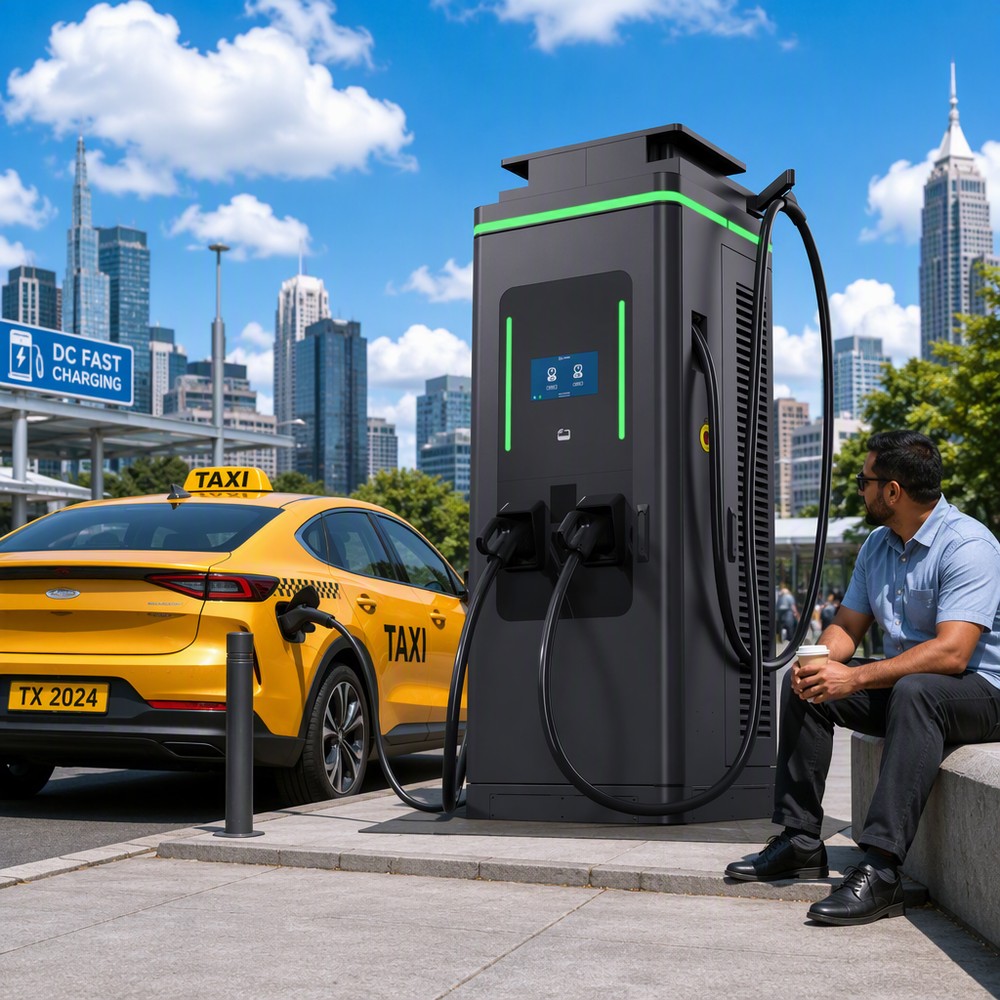
- Dual output, two vehicles at once. Two independent DC outputs allow simultaneous charging sessions. A single MD-EU 60/80/120kW handles the morning rush of two shifts of vehicles instead of forcing a queue, which measurably improves driver satisfaction and site throughput.
- Three power levels in one platform. Choose 60kW, 80kW or 120kW from the same cabinet. Sites can start conservatively and upgrade capacity in place, avoiding expensive rip-and-replace projects when demand grows.
- Full 200–1000Vdc output range. From 400V passenger EVs to 800V commercial platforms, the charger adapts its output voltage to the vehicle’s request, maximizing compatibility and charging speed across the whole fleet.
- 350A maximum output current. High current capability shortens real-world session times, particularly for large batteries that accept high current in the mid-range of their state of charge.
- More than 95% conversion efficiency. Lower losses mean lower energy bills, less heat in the cabinet and a smaller environmental footprint per kilowatt-hour delivered.
- Multi-standard compatibility. CCS, CHAdeMO, GB/T and NACS support means the station is never limited to one brand or region of vehicles. Mixed traffic flows through the same two outputs.
- OCPP 1.6 and OCPP 2.0 with 4G, Wi-Fi and Ethernet. Triple connectivity with redundant communication paths keeps the charger manageable from any OCPP-compatible backend, with real-time status, remote start and stop, and over-the-air updates.
- IP54 enclosure with forced-air cooling. Built for outdoor duty cycles and harsh weather, the sealed cabinet protects sensitive electronics while efficient forced-air cooling keeps power modules inside their optimal temperature window.
- CE and TUV certified. Independent testing and certification simplify permitting, insurance and installation approvals across the markets where the product is deployed.
3. Technical Specifications
The MD-EU 60/80/120kW is specified to work reliably in demanding commercial conditions. The table below summarizes the key electrical, mechanical and communication parameters of the platform.
| Parameter | Specification |
|---|---|
| Model | MD-EU 60/80/120kW |
| Input voltage | 400Vac ±10% (three-phase) |
| Output voltage | 200–1000Vdc |
| Output power | 60kW / 80kW / 120kW (selectable) |
| Max output current | 350A |
| Output configuration | Dual output (two vehicles simultaneously) |
| Efficiency | >95% |
| Connector standards | CCS, CHAdeMO, GB/T, NACS |
| Cooling | Forced-air cooling |
| Enclosure rating | IP54 |
| Communication | 4G, Wi-Fi, Ethernet |
| Charging protocol | OCPP 1.6, OCPP 2.0 |
| Certifications | CE, TUV |
Every parameter in the table reflects the final validated design of the platform. The 400Vac ±10% input tolerance is important for real sites where grid voltage fluctuates with neighborhood load; the charger keeps working and keeps delivering rated power across that entire input window. On the output side, the 200–1000Vdc range combined with the 350A current limit defines the operating envelope: the power electronics continuously shape voltage and current to whatever the connected vehicle requests, up to the rated power of the configuration.
The dual-output architecture deserves special attention because it is what separates a productive station from a single-vehicle bottleneck. With two outputs, one unit replaces what would otherwise require two separate chargers, halving cabinet footprint, site wiring and maintenance touchpoints. The power allocation logic shares the available 60, 80 or 120kW between the two active sessions, so neither vehicle is left idle while the other finishes, and a second vehicle can plug in as soon as the first session reaches its target state of charge.
4. Charging Protocols & Connector Compatibility
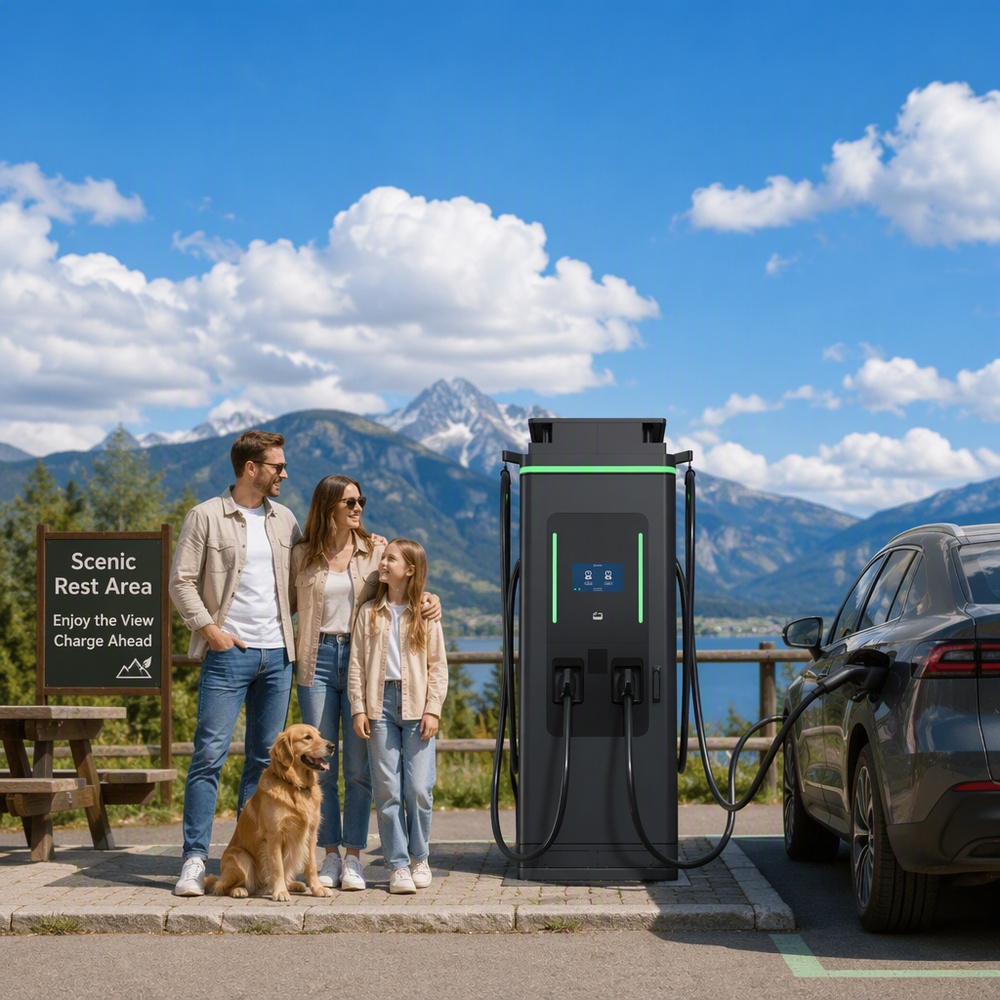
A commercial charging station lives or dies by the vehicles it can serve. The MD-EU 60/80/120kW therefore supports the four connector families that dominate the global electric vehicle market: CCS, CHAdeMO, GB/T and NACS. CCS covers the vast majority of European and North American fast-charging EVs, CHAdeMO remains essential for Japanese legacy vehicles, GB/T is the standard for the Chinese market, and NACS is the emerging North American standard embraced by a fast-growing share of new vehicles. Because the platform is prepared for all four, operators do not need to guess which technology will win in their region; they simply configure the connectors that fit their traffic today.
The dual-output design is what makes this flexibility genuinely useful. Each of the two outputs can terminate in a different connector type, so one MD-EU 60/80/120kW can, for example, serve a CCS vehicle on output A while a CHAdeMO or GB/T vehicle charges on output B. When both outputs are busy, the built-in power management algorithm splits the available power intelligently: it monitors the voltage and current requested by each vehicle, delivers what each battery can safely accept, and reallocates power in real time as one session tapers and the other needs more. The result is a station that never wastes available capacity and keeps both bays productive for the maximum number of vehicles per day.
Current delivery is another differentiator. With up to 350A available, the charger can push high current into batteries that are designed to accept it, which is exactly what shortens sessions on the road. Voltage is matched to the vehicle across the full 200–1000Vdc window, so an 800V truck platform receives a suitably high voltage without the derating that fixed-voltage designs suffer. This combination of wide voltage range and high current capability means the same unit that fast-charges a 400V taxi also serves next-generation 800V vans, making the MD-EU 60/80/120kW a future-proof choice for mixed fleets.
A typical session illustrates how the platform behaves in daily service. A driver plugs in, the charger and vehicle complete the handshake, and the station negotiates the highest voltage and current the battery can safely accept within the 200–1000Vdc envelope and the 350A limit. Power delivery follows the vehicle’s own charging curve, starting strong and tapering as the battery approaches its target state of charge, which protects battery health while keeping the session as short as the hardware and battery allow. When a second vehicle connects to the other output, the power management controller reviews both sessions and reallocates the available kilowatts, favoring the vehicle that can still accept high power. The result is smooth, predictable sessions for every driver, and for the operator, a station that reliably achieves high energy throughput hour after hour. Every session is recorded with start time, end time, energy delivered and any alarms raised, and this data flows to the backend over 4G, Wi-Fi or Ethernet through OCPP 1.6 or OCPP 2.0, giving operators a complete, auditable record of station performance.
5. Smart Connectivity, OCPP & Remote Management
Modern charging infrastructure is only as good as its connection to the operator. The MD-EU 60/80/120kW ships with three independent communication interfaces: 4G cellular, Wi-Fi and Ethernet. This redundancy is a practical feature, not a marketing line. If the site’s wired network fails, the charger falls back to 4G and remains visible, controllable and billable. If cellular coverage is poor in a basement garage, Ethernet or Wi-Fi keeps the station on the grid. Operators can also mix interfaces, using Ethernet as the primary link and 4G as an automatic backup for maximum uptime.
On the software side, the charger implements both OCPP 1.6 and OCPP 2.0, the two protocol generations used by virtually all charging management systems worldwide. OCPP 1.6 provides rock-solid remote start and stop, transaction data, error reporting and configuration management that has powered millions of sessions across the industry. OCPP 2.0 adds a richer security model, better firmware update flows and improved messaging for smart charging and energy management. Supporting both versions means the station connects cleanly to legacy backends and to modern platforms that have already migrated to 2.0, with no middleware and no vendor lock-in.
Remote management capabilities translate directly into lower operating costs. Site operators can monitor real-time status of both outputs, review completed sessions, configure pricing and access rules, and push firmware updates over the air without dispatching a technician. Alarms and fault warnings arrive at the backend immediately, allowing proactive response before a problem escalates into downtime. Combined with the efficiency of more than 95%, the connectivity suite ensures that every kilowatt-hour is delivered, measured and reported accurately, which is precisely what energy billing, subsidy claims and fleet reporting depend on.
Beyond basic session control, the connectivity suite supports the operational workflows that modern charging businesses run on. Metered energy data is captured per session and per output, enabling accurate billing whether the site charges per kilowatt-hour, per minute or through a subscription model. Operators can define tariff structures, off-peak pricing and access policies from the backend, and changes take effect without a site visit. The charger also reports grid-side and output-side measurements, so energy managers can track consumption patterns, identify unusual behavior and plan capacity upgrades with real data. For fleet operators, session records integrate into telematics and accounting systems, giving a per-vehicle cost breakdown that supports internal chargeback and operational analysis. Remote diagnostics reduce mean time to repair: the backend sees the fault code and history before a technician is dispatched, so the right spare part and the right tools arrive on the first visit. Together, these capabilities turn the MD-EU 60/80/120kW from a power converter into a fully managed element of the operator’s digital infrastructure.
6. Safety, Cooling & Certifications
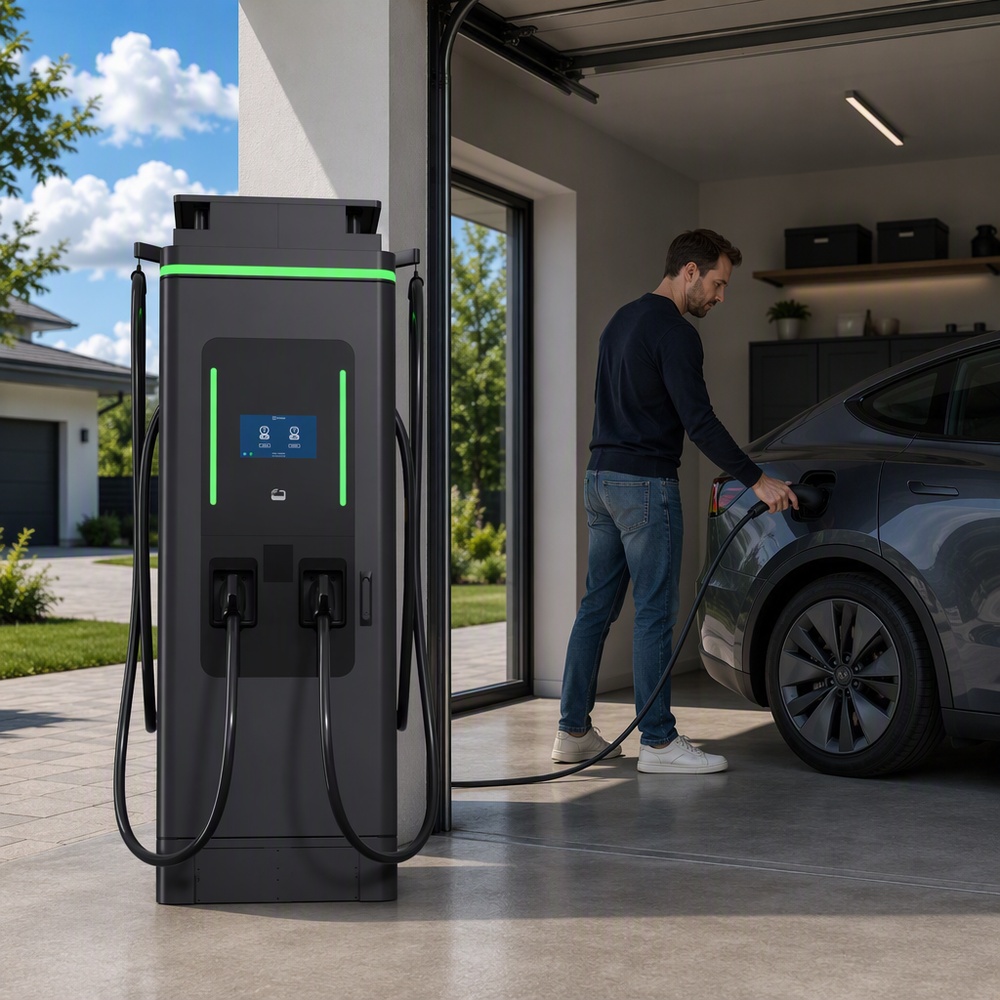
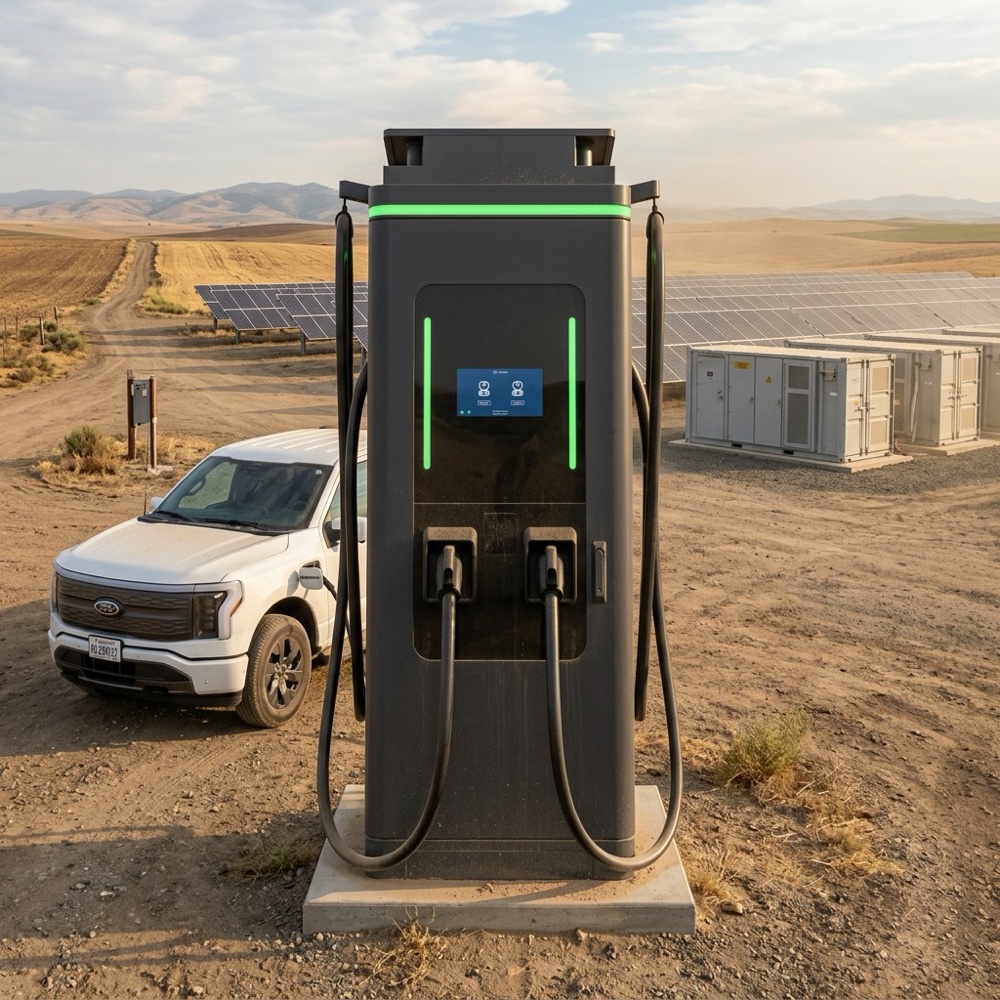
Outdoor charging hardware faces rain, dust, temperature swings and years of continuous duty. The MD-EU 60/80/120kW addresses these conditions with an IP54-rated enclosure, which protects the internal power electronics against dust ingress and water splashes from any direction. That rating is the practical threshold for reliable operation in parking lots, roadside locations and depot yards, where weather protection is not optional. Robust protection features are embedded throughout: over-voltage, under-voltage, over-current, over-temperature and leakage protection guard both the vehicle and the charger in every operating mode.
Thermal management uses forced-air cooling, an architecture chosen deliberately for commercial reliability. Forced-air cooling uses filtered fans to move air across the power modules, keeping semiconductor junction temperatures within specification even during sustained high-current sessions, with no pumps, no coolant and no risk of leaks. Maintenance is simple and predictable: periodic cleaning of the air filters is the primary requirement, and the cooling system can be serviced by any qualified electrician without specialized fluid handling. The design keeps the cabinet compact, reduces weight and lowers both first cost and lifetime service cost.
Certification confirms the engineering intent. The MD-EU 60/80/120kW carries CE marking for the European market and TUV certification, both of which are recognized by installers, insurers and permitting authorities across global markets. These certifications are not one-time stickers; they are backed by documented test evidence covering electrical safety, EMC behavior and product performance, which simplifies project approval and reduces the risk profile of every installation.
Electrical robustness extends beyond the protection functions themselves. The input stage is engineered to tolerate the transients, imbalances and voltage excursions that occur on real commercial grids, and the output stage is protected against the back-feed and fault conditions that can arise from vehicle-side events. Grounding and bonding points are clearly provided and documented, supporting the work of site electricians and inspectors alike. The enclosure and internal layout are designed with thermal and electrical separation in mind: power stages, control electronics and communication hardware are arranged to minimize interference, so the 4G, Wi-Fi and Ethernet links stay reliable even while the converter operates at full output. Connector bays are positioned for convenient cable routing and strain relief, reducing wear on charge cables in high-traffic installations. Every component is selected and tested for the continuous duty profile of a commercial charger, from the forced-air cooling fans to the contactors and metering hardware, and the CE and TUV certification evidence confirms that the complete system meets the safety and EMC requirements of the markets it serves.
7. Applications & Why Choose MD-EU
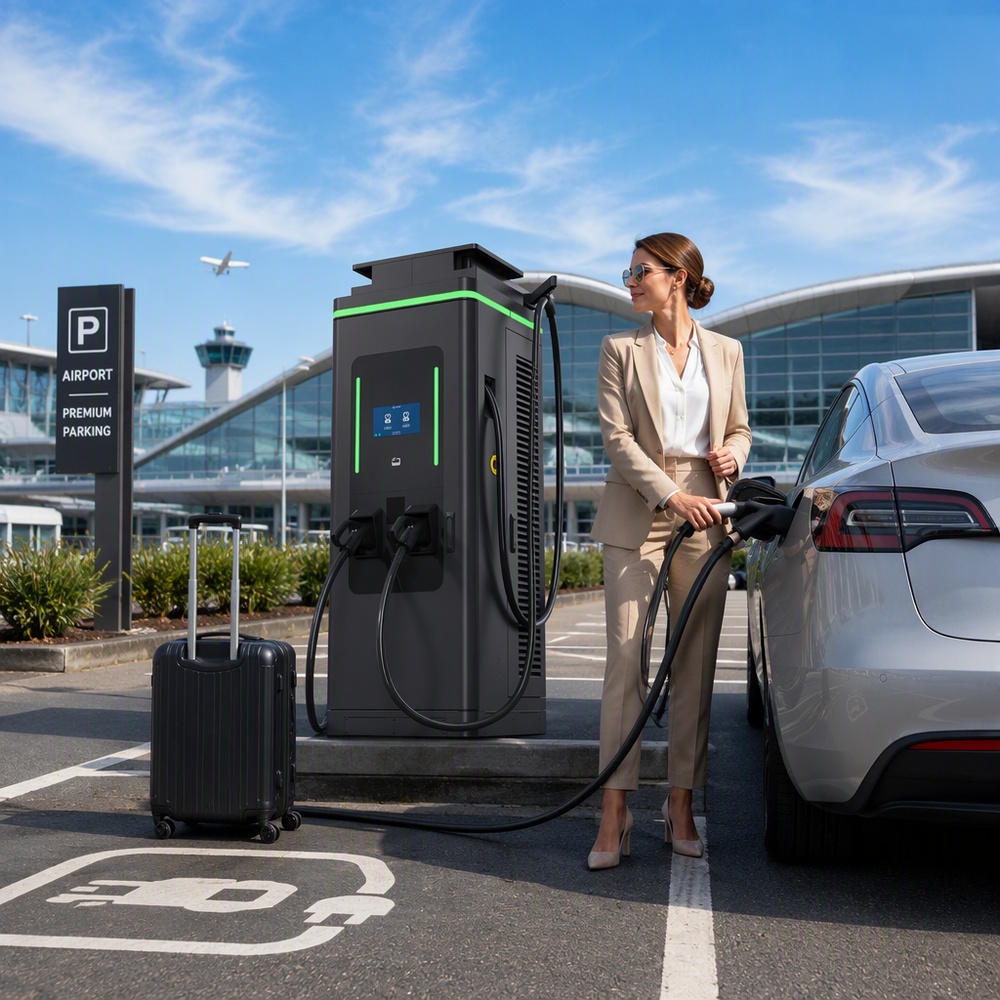
The MD-EU 60/80/120kW fits the widest range of commercial charging use cases in the MD-EU family. Vehicle dealerships use it to charge demonstrators and delivered cars while customers wait. Car rental companies keep returning vehicles ready for the next hire. Hotels, retail centers and municipal parking facilities offer fast charging as a service that attracts visitors and generates revenue. Delivery and ride-hailing fleets depend on its dual outputs to turn vehicles around quickly between shifts, and workplace sites use it to keep employee vehicles topped up during the working day.
For each of these scenarios, the economics work because the platform is efficient and compact. More than 95% conversion efficiency means the operator pays for energy delivered to vehicles, not energy lost as heat. The dual-output design doubles the utilization of every square meter of site space. The three selectable power levels give buyers a growth path: start with 60kW where demand is uncertain, step to 80kW or 120kW as utilization climbs, and keep the same cabinet, cabling and mounting points throughout. With IP54 protection, forced-air cooling, CE and TUV certification and OCPP 1.6/2.0 connectivity over 4G, Wi-Fi and Ethernet, the MD-EU 60/80/120kW is the dependable, future-proof foundation for any commercial charging site.
Support is part of the product. Every MD-EU 60/80/120kW ships with comprehensive documentation covering installation, commissioning, operation and maintenance, and firmware updates are delivered over the air through the OCPP connection, so the charger improves over time without site visits. The manufacturer maintains a spares program for the service life of the platform, covering fans, filters, controllers and power modules, which keeps downtime short and repair costs predictable. Because the same platform family spans 60, 80 and 120kW with shared components and procedures, operators with multiple sites benefit from uniform training, stock and service processes. The modular power architecture also means that a site which outgrows its initial configuration can step up within the family rather than starting over, preserving the original investment in civils, cabling and connectivity. From a single dealership unit to a corridor network, the MD-EU platform is backed by a design and service philosophy that treats uptime as the primary product: dependable hardware, simple service, and the network tools to keep every kilowatt-hour moving.
For procurement and engineering teams, the decision criteria are clear. The charger covers the 200–1000Vdc range, delivers up to 350A, accepts 400Vac ±10% input, charges CCS, CHAdeMO, GB/T and NACS vehicles on two simultaneous outputs, stays above 95% efficient, and integrates with any OCPP-compliant platform over 4G, Wi-Fi or Ethernet. It is IP54-rated, forced-air cooled and CE/TUV certified. When the site plan demands fast charging with low risk and high uptime, the MD-EU 60/80/120kW is the answer.
Products categories
-
MIDA 400kW Ultra Fast DC Charger CCS2 Dual Gun ...
-
MIDA 240kW 320kW DC Fast Charger CCS2 Dual Gun ...
-
MIDA 160kW 180kW DC Fast Charger CCS2 EV Chargi...
-
MIDA 120kW Dual Gun DC Fast Charger CCS2 EV Cha...
-
MIDA 60kW 80kW Dual Gun DC Fast Charger CCS2 EV...
-
MIDA 120kW 200kWh BESS DC Fast Charging System ...