
120kw 180kw 240kW Dual-Output DC Fast Charger 200–1000Vdc, 350A, OCPP 2.0
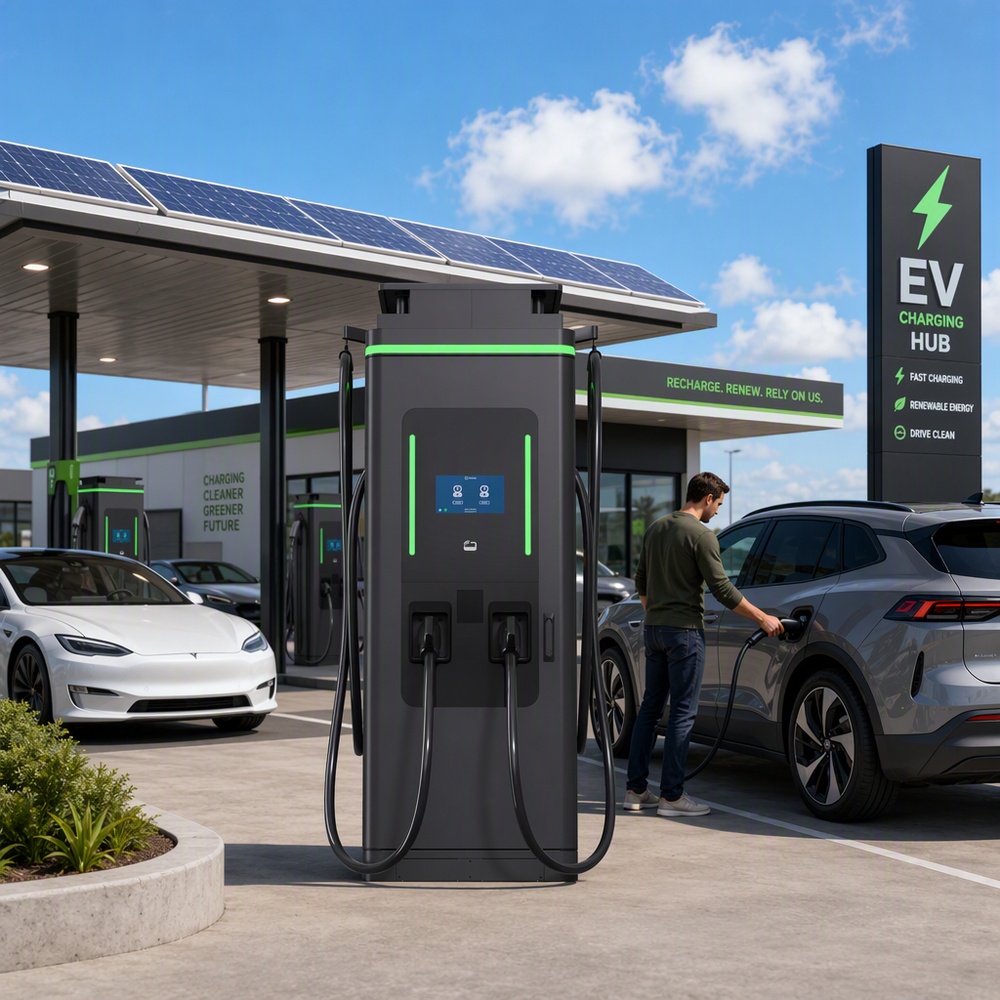
MD-EU 240kW Dual-Output DC Fast Charger
1. Product Overview
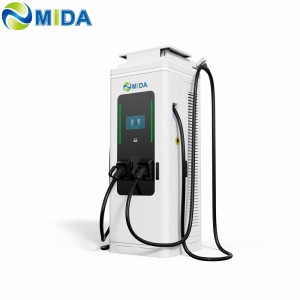
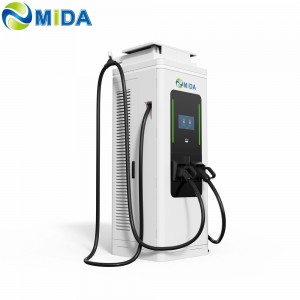
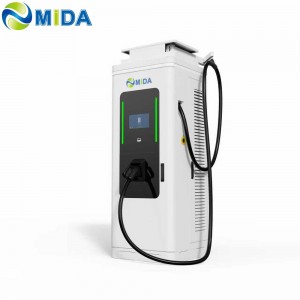
The MD-EU 240kW is a dual-output DC fast charger that targets the highest-utilization nodes of the electric vehicle network: highway charging corridors, logistics hubs and commercial depots where every minute of charging translates directly into revenue or fleet productivity. With 240kW of rated output power, the charger delivers a meaningful range in a short stop, and its two independent outputs ensure that two vehicles can charge at the same time, keeping station throughput high during peak traffic windows and eliminating the queue-building bottleneck that single-output units create.
Electrical design is built around real-world conditions. The charger operates from a standard 400Vac ±10% three-phase supply, tolerating the voltage fluctuation that is normal at commercial sites, and converts it into a regulated DC output across the full 200–1000Vdc range. That range is the key to serving today’s diverse vehicle fleet: 400V passenger cars, 800V commercial vans and trucks, and everything in between charge at their native voltage with no derating penalty. Output current reaches a maximum of 350A, and conversion efficiency stays above 95%, a figure that pays dividends every single day on a machine that runs for thousands of hours per year.
Interoperability is complete. The MD-EU 240kW supports the CCS, CHAdeMO, GB/T and NACS connector standards, so the station is ready for European, North American and Asian vehicles alike, with the two outputs configurable with different connectors to match site traffic. Connectivity is equally future-proof: 4G, Wi-Fi and Ethernet interfaces together with OCPP 1.6 and OCPP 2.0 protocol support ensure seamless integration into any charging management platform, with full remote monitoring and control. The IP54-rated enclosure and forced-air cooling design make the unit suitable for outdoor installation in any climate, and CE and TUV certifications provide the compliance evidence that procurement and permitting teams require.
Throughput is the language of corridor charging, and the MD-EU 240kW speaks it fluently. A dual-output 240kW station can realistically complete more sessions per hour than two single-output chargers of the same total capacity, because power is never stranded on an idle bay while a busy bay could use it. Consider the morning and evening peaks at a highway plaza: arrivals bunch, and the station’s controller balances the two sessions continuously, directing capacity toward whichever vehicle can use it, so the queue clears faster and driver satisfaction stays high. The same logic serves fleet depots, where vehicles arrive in waves between shifts. Behind this behavior sits a robust control architecture that monitors voltage, current and session state on both outputs at high frequency and reallocates the 240kW budget in real time, all within the 200–1000Vdc envelope and the 350A limit. For operators, this translates into the metric that matters: energy delivered per hour per site, the figure that drives both revenue and the carbon reduction that electrification promises. Every percentage point of the platform’s above-95% efficiency and every kilowatt of avoided idling contributes to that outcome.
2. Key Features & Benefits
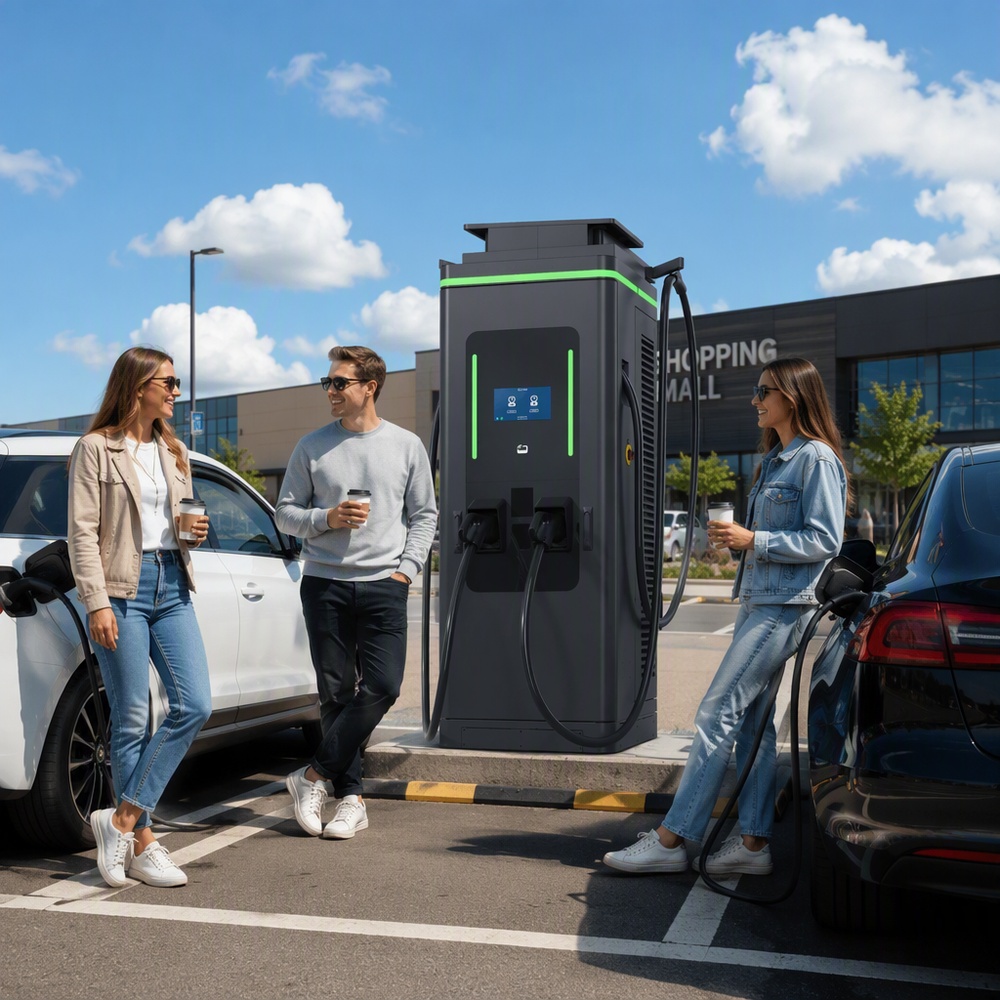
- 240kW of fast-charging power. Enough energy to restore a typical passenger EV from low state of charge to highway range in the time of a coffee stop, and enough headroom to serve commercial vehicles efficiently.
- Dual independent outputs. Two vehicles charge simultaneously with per-session voltage and current control, maximizing the number of vehicles served per hour and improving driver experience at busy sites.
- Full 200–1000Vdc output range. Native-voltage charging for 400V and 800V architectures, including the next generation of high-voltage commercial EVs, without derating or compatibility compromises.
- 350A maximum current. High current capability for large battery packs means shorter sessions, shorter queues and higher daily energy throughput per installed position.
- Efficiency above 95%. Less energy lost to heat, lower electricity cost per session and cooler operation that extends the service life of the power electronics.
- CCS, CHAdeMO, GB/T and NACS support. One station serves the full mix of connector standards in the market, with flexible dual-output connector configuration.
- OCPP 1.6 and OCPP 2.0 over 4G, Wi-Fi and Ethernet. Redundant, standards-based connectivity that integrates with existing backends and enables remote management, smart charging and secure firmware updates.
- IP54 enclosure and forced-air cooling. Outdoor-ready durability with a simple thermal design that requires only routine filter maintenance over years of service.
- CE and TUV certification. Audited safety and performance evidence that accelerates approval processes and de-risks deployment.
3. Technical Specifications
The table below lists the final validated parameters of the MD-EU 240kW platform, which form the contractual basis for performance in the field.
| Parameter | Specification |
|---|---|
| Model | MD-EU 240kW |
| Input voltage | 400Vac ±10% (three-phase) |
| Output voltage | 200–1000Vdc |
| Output power | 240kW |
| Max output current | 350A |
| Output configuration | Dual output (two vehicles simultaneously) |
| Efficiency | >95% |
| Connector standards | CCS, CHAdeMO, GB/T, NACS |
| Cooling | Forced-air cooling |
| Enclosure rating | IP54 |
| Communication | 4G, Wi-Fi, Ethernet |
| Charging protocol | OCPP 1.6, OCPP 2.0 |
| Certifications | CE, TUV |
Understanding how these parameters work together is essential for site planning. The 400Vac ±10% input window means the charger is forgiving of grid conditions that would trip less robust equipment, a real advantage at highway service areas where the local transformer is shared with other heavy loads. The 200–1000Vdc output range with a 350A current ceiling gives the power electronics the flexibility to match any connected battery: high voltage for 800V platforms, high current for 400V vehicles that request it, and precise current shaping through the entire state-of-charge curve.
The dual-output architecture is what makes 240kW useful for two vehicles rather than one. The station controller monitors both sessions continuously and reallocates power as charging progresses: a vehicle entering the last phase of charging tapers its demand, and that power flows immediately to the other output. The result is that the station’s full capacity is rarely wasted, even when the two vehicles have different battery sizes, chemistries and arrival states of charge. This dynamic balancing is the difference between a charger that serves a site and one that simply occupies it.
Grid compatibility deserves equal attention at 240kW, because the site’s connection often determines what is possible. The charger accepts 400Vac ±10% input, and its power factor and harmonic behavior are designed for compliance with typical commercial supply requirements, reducing the risk of nuisance tripping or penalties on the operator’s utility account. The control system ramps power smoothly on session start, avoiding the current surges that can disturb sensitive neighboring loads, and supports configurable ramp rates where the site or the grid operator requires gentler transitions. For depots expanding in phases, this predictability means the grid connection designed for today’s load can absorb tomorrow’s growth without rework. The dual outputs also support staged commissioning: one output can open for public use while the second is reserved for testing or a dedicated fleet, all managed remotely through OCPP. These practical details, combined with the platform’s 200–1000Vdc output range and 350A capability, make the MD-EU 240kW as easy to integrate with the site’s infrastructure as it is powerful on the connector.
4. Charging Protocols & Connector Compatibility
A 240kW station represents a significant capital investment, and its return depends on serving the broadest possible vehicle population. The MD-EU 240kW supports all four major connector standards: CCS, CHAdeMO, GB/T and NACS. CCS covers the bulk of fast-charging vehicles in Europe and North America, CHAdeMO serves the large installed base of Japanese fast-charge vehicles, GB/T is the standard across China, and NACS is rapidly becoming the default for new vehicles in North America. By preparing the platform for all four, the manufacturer ensures that no vehicle class is excluded from the site.
The dual outputs turn connector support into operational flexibility. A site can configure output A with CCS to serve mainstream passenger traffic and output B with CHAdeMO, GB/T or NACS to cover the remainder, or equip both outputs with the same connector to double capacity for a homogeneous fleet. Since each output is electrically independent, mixed sessions run without interference: the charging profile of one vehicle never distorts the voltage or current delivered to the other, within the shared 240kW budget and the 350A per-output ceiling.
Charging speed at 240kW is a step change for many operators. A typical 60–80kWh passenger battery can reach a practical driving range in 10 to 20 minutes, and larger commercial batteries benefit from the high current delivery when their thermal and cell designs allow it. The 200–1000Vdc range ensures that this performance extends to 800V platforms, which are increasingly common in fleets, without the derating seen in chargers with narrower voltage windows. For site operators, that means shorter average sessions, more vehicles per day and a better return on the charging infrastructure investment.
Charging-curve intelligence is what separates a good session from a great one. The MD-EU 240kW monitors the vehicle’s voltage and current requests continuously and shapes delivery accordingly: maximum current early, controlled tapering as the battery fills, and a clean handshake to complete the session when the target is reached. This behavior protects battery health while extracting the fastest practical charge time from the available 240kW. When two vehicles share the station, the controller orchestrates both curves at once, advancing the session that can accept more power and easing the one that has begun to taper, so the station never forces a fast-charging vehicle to wait behind a nearly full battery. Connector choice adds the final layer: with CCS, CHAdeMO, GB/T and NACS all supported, the site operator configures each output to match local traffic, and because both outputs are independent, a CHAdeMO vehicle’s session parameters never constrain a CCS vehicle on the adjacent output. The result is a station that behaves predictably for every driver, whether they arrive in a 400V hatchback, an 800V van or a next-generation NACS-equipped sedan.
5. Smart Connectivity, OCPP & Remote Management
High-power charging assets must be managed like the revenue-generating equipment they are. The MD-EU 240kW provides 4G cellular, Wi-Fi and Ethernet interfaces, enabling operators to build redundant communication paths into their network design. If the primary link fails, the station automatically continues operation on the backup interface, and sessions remain visible, controllable and billable throughout. For distributed networks, this resilience directly protects availability and revenue.
The charger implements both OCPP 1.6 and OCPP 2.0, the two protocol generations that dominate the charging management ecosystem. OCPP 1.6 delivers proven remote session control, transaction reporting and diagnostics compatible with virtually every backend platform in operation. OCPP 2.0 adds modern security mechanisms, improved firmware management and richer smart-charging capabilities that let operators participate in demand response and energy-cost optimization programs. Supporting both versions means the hardware is ready for any backend migration path the operator chooses.
Remote management transforms field operations. Operators monitor the live status of both outputs, access detailed session and energy data, adjust pricing and access rules, and deploy firmware updates over the air from a central console. Faults are reported to the backend in real time, enabling fast, targeted response instead of expensive reactive site visits. Combined with efficiency above 95%, the platform delivers accurate measurement and reporting of every kilowatt-hour, giving operators the data they need for billing accuracy, energy procurement and fleet cost analysis.
Smart charging is built into the protocol foundation. With OCPP 2.0, the charger supports the messaging that enables coordinated smart charging: the backend can command charge profiles, limits and schedules, and the charger reports back its actual behavior, closing the loop that energy managers need. A site operator can, for example, cap the station’s demand during utility peak windows, schedule depot charging to run in the cheap overnight tariff band, or participate in demand-response events without manual intervention. OCPP 1.6 remains fully supported for networks still running legacy platforms, and both protocol versions share the same 4G, Wi-Fi and Ethernet transport layer, so the communication architecture is consistent regardless of backend choice. The charger’s local intelligence provides a safety net too: if the connection to the backend is lost, the station continues charging safely according to its configured rules, buffers session data, and synchronizes everything to the backend when connectivity returns. This combination of local autonomy and remote orchestration keeps the station productive in every operational scenario, from full connectivity to degraded communication, and protects both revenue and driver trust.
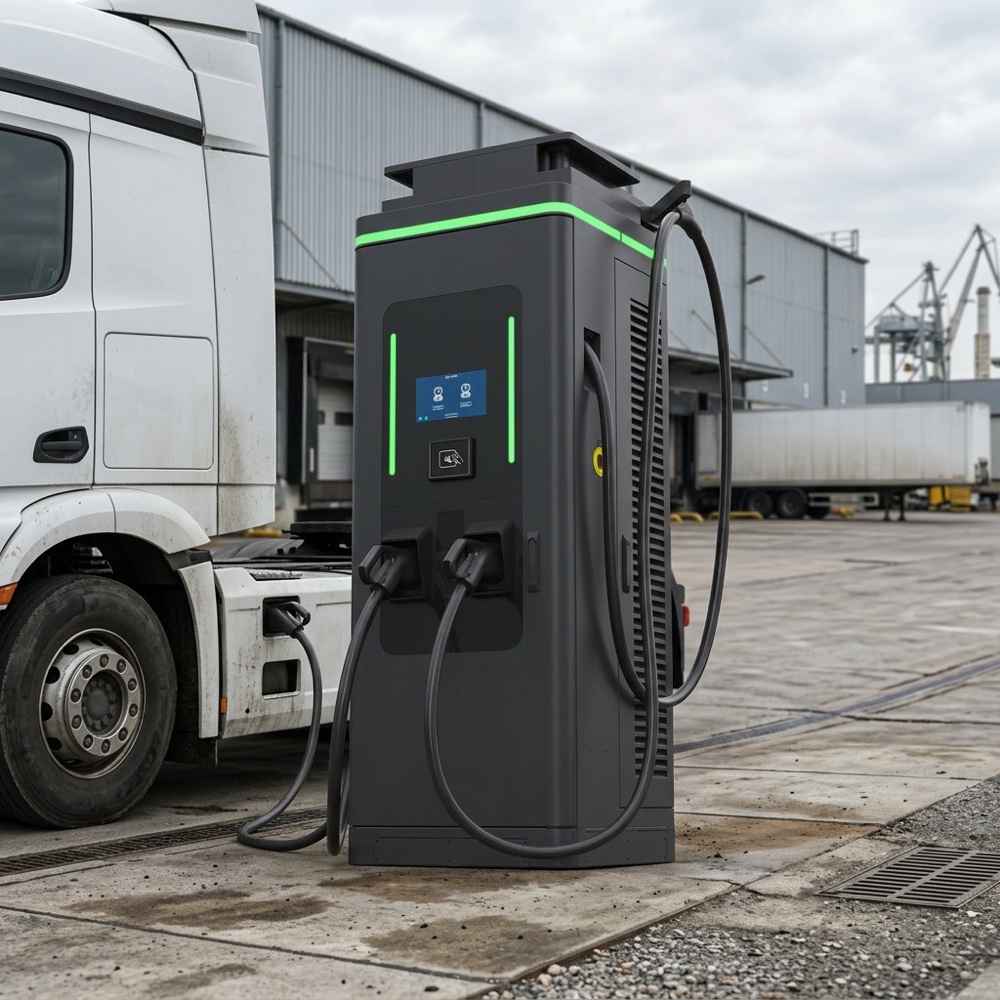
6. Safety, Cooling & Certifications
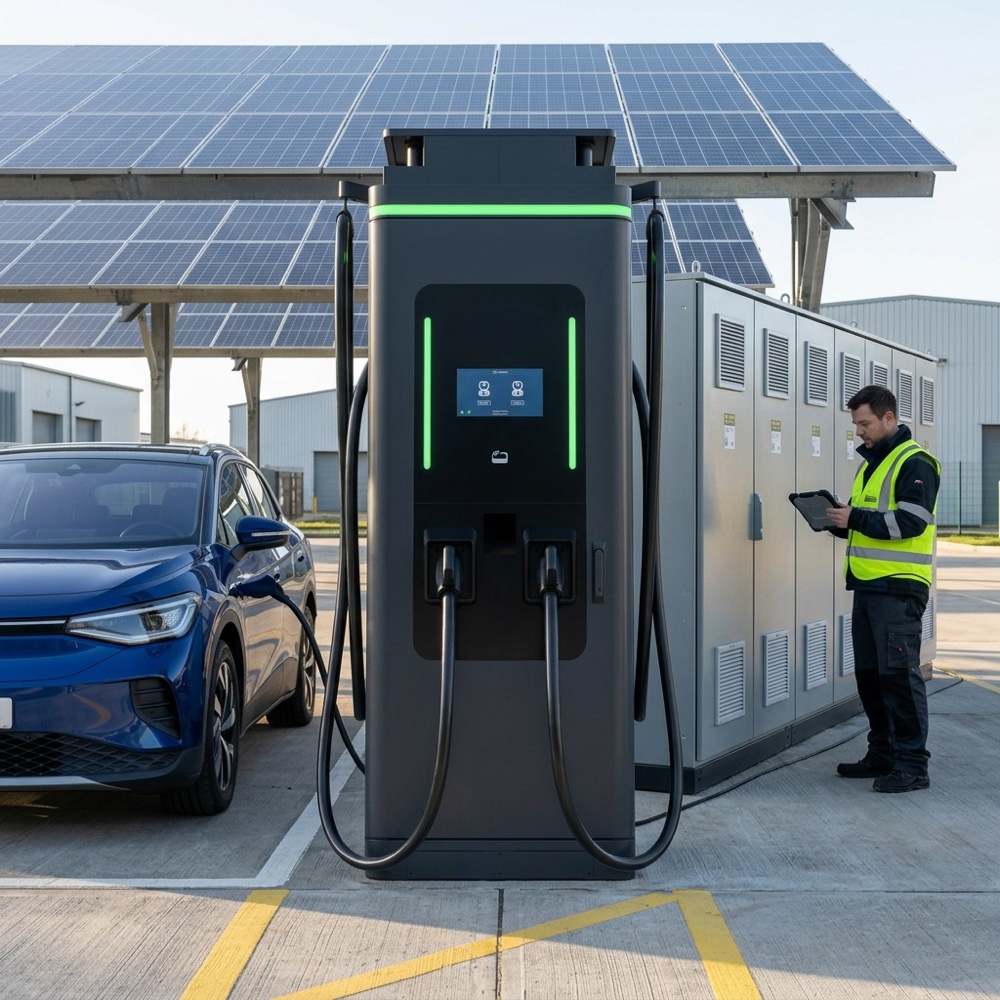
Outdoor high-power equipment operates in demanding conditions, and the MD-EU 240kW is engineered accordingly. The IP54 enclosure protects against dust ingress and water splashes from any direction, the protection class required for reliable year-round operation at roadside and depot locations. Electrical safety is enforced by a comprehensive protection architecture that continuously monitors over-voltage, under-voltage, over-current, over-temperature and leakage conditions, automatically halting delivery and notifying the operator if any limit is exceeded.
Thermal management uses forced-air cooling, chosen for its combination of effectiveness and simplicity at high power levels. Filtered airflows keep the power modules within their specified temperature window even during sustained high-current sessions in peak summer conditions, and the absence of pumps and coolants eliminates leak risks and the specialized servicing they require. The cooling system’s routine maintenance is limited to periodic filter inspection and cleaning, which any local service technician can perform, keeping the total cost of ownership predictable.
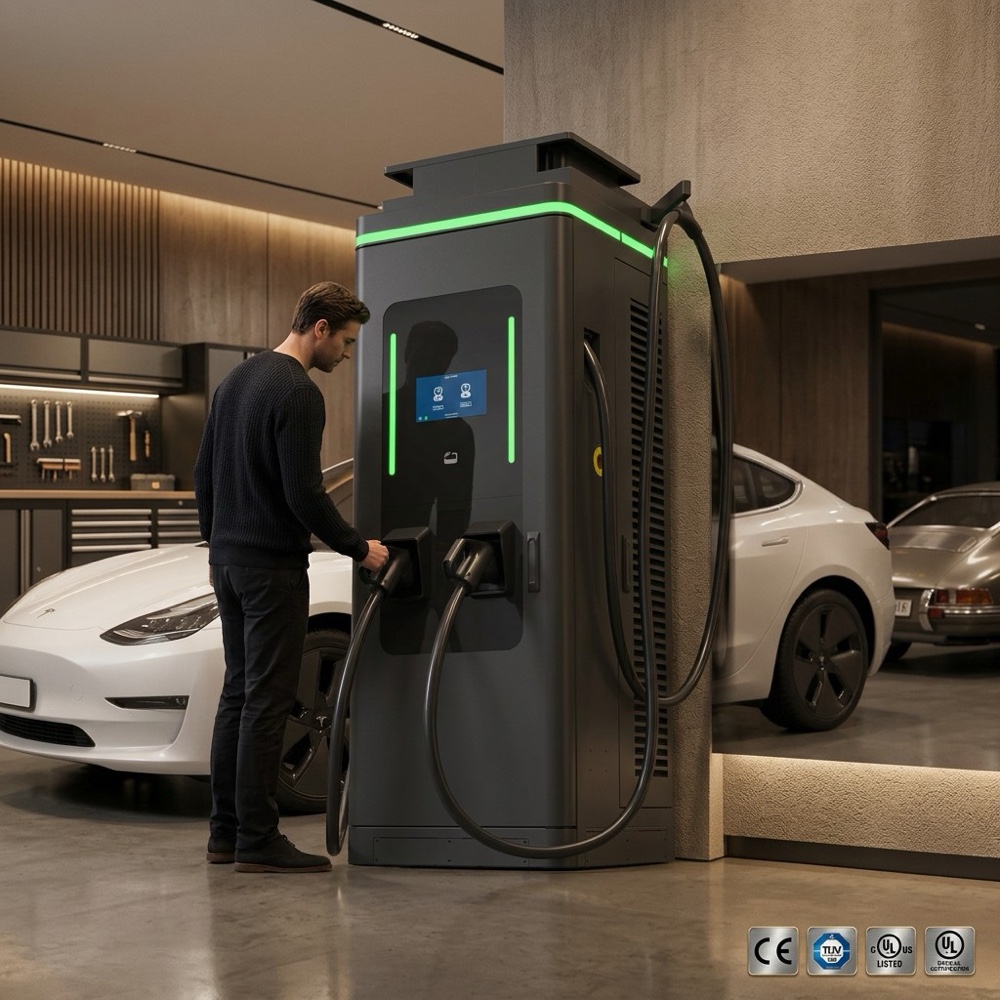
Certification is a core deliverable, not an afterthought. The MD-EU 240kW carries CE marking and TUV certification, both backed by documented testing for electrical safety, electromagnetic compatibility and performance. For project developers, these certificates streamline grid connection applications, permitting and insurance; for operators, they provide an auditable baseline of quality that protects the network’s reputation across years of service.
Climate resilience is a design requirement, not an aspiration. The MD-EU 240kW is specified to operate across the temperature range typical of outdoor commercial sites, with the forced-air cooling system sized to hold power-module temperatures within specification during sustained full-power sessions in hot weather and the enclosure protecting electronics from rain, dust and snow. Air filters are sized and positioned to balance cooling performance with maintenance intervals, and the control system monitors filter condition and cooling performance, alerting operators before thermal derating or service is needed. The cabinet’s materials and finishes are selected for UV stability and corrosion resistance, so years of sun, salt air or road spray do not compromise the enclosure or its IP54 seal. Internally, connectors, cables and terminations are strain-relieved and routed to avoid chafing and fatigue in a unit that may experience decades of daily use. These details, invisible on a spec sheet, are exactly what keep a corridor station online through the seasons, and they are validated through the extended environmental testing documented for the CE and TUV certifications.
7. Applications & Why Choose MD-EU
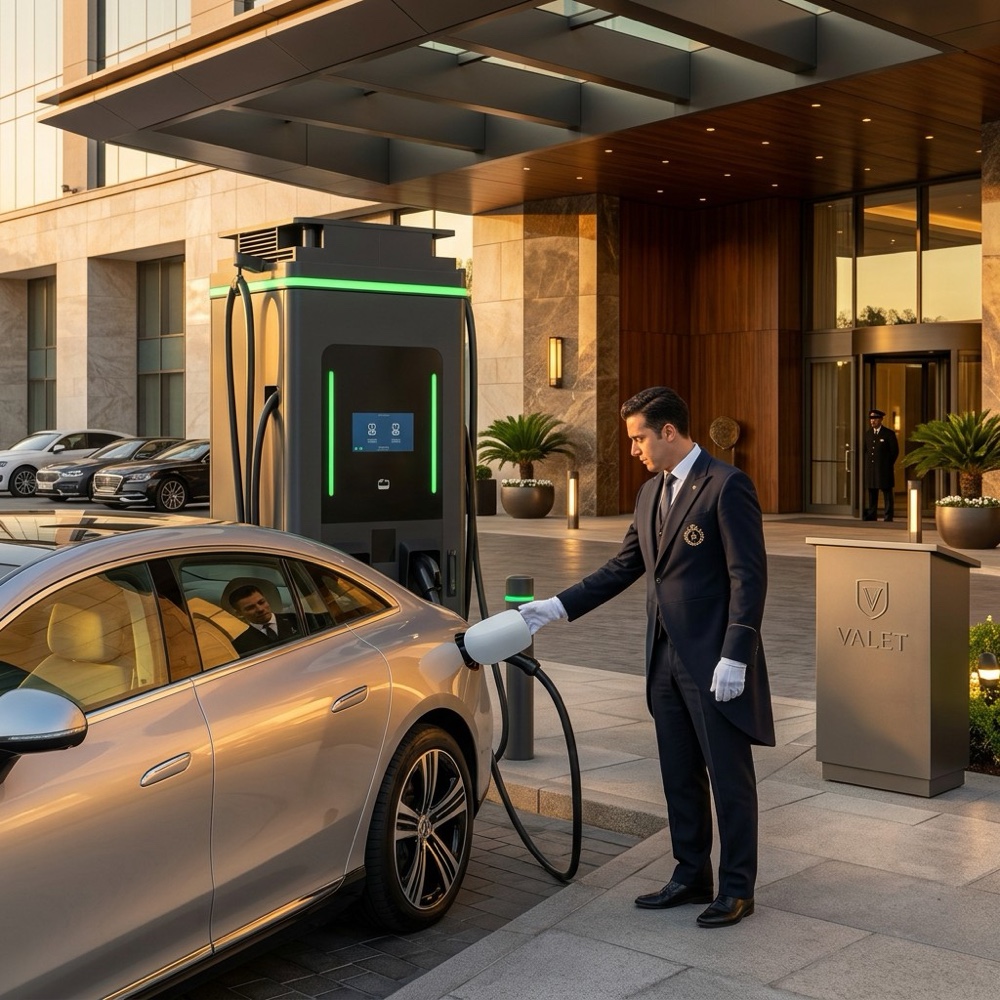
The MD-EU 240kW is designed for sites where charging volume is high and time is money. Highway charging plazas install it to serve travelers with fast, reliable top-ups, with dual outputs keeping both bays busy during peak holiday traffic. Logistics and e-commerce fleet depots use it to recharge delivery vans and light trucks between shifts, where 240kW and 350A restore usable range quickly and keep vehicles on the road. Municipal and commercial parking operators deploy it as a premium amenity that generates revenue and encourages EV adoption among residents and visitors.
The business case is strengthened by every element of the design. Efficiency above 95% minimizes wasted energy across a high annual energy throughput, directly improving margin per session. The dual-output architecture maximizes utilization of each parking position and each grid connection point. The 200–1000Vdc voltage range, multi-standard connector support and 350A current capability ensure the asset remains valuable as the vehicle population evolves. IP54 protection and forced-air cooling keep it reliable outdoors, while CE and TUV certification smooths the path to installation.
For site developers and network operators, the specification sheet tells the story: 400Vac ±10% input, 200–1000Vdc output, 350A maximum current, greater than 95% efficiency, dual outputs, CCS/CHAdeMO/GB/T/NACS compatibility, 4G/Wi-Fi/Ethernet connectivity, OCPP 1.6 and 2.0, IP54 enclosure, forced-air cooling and CE/TUV certification. Where high throughput and dependable fast charging are the goal, the MD-EU 240kW delivers on every line.
Deployment patterns confirm the platform’s versatility. A regional charging network might install the MD-EU 240kW at half a dozen corridor sites, each with two bays and a shared grid connection, coordinating the fleet through a single OCPP platform with per-site load management. A retail operator with a large parking footprint might use it to create a destination charging zone, pairing the dual outputs with a two-hour free-parking policy that turns charge time into dwell time. A logistics company electrifying its depot pairs the charger with scheduled overnight and midday charging windows, using OCPP 2.0 smart-charging profiles to minimize energy cost while guaranteeing vehicles are ready at dispatch time. In every pattern, the same specification applies: 400Vac ±10% input, 200–1000Vdc output, 350A maximum current, efficiency above 95%, dual outputs, CCS/CHAdeMO/GB/T/NACS compatibility, 4G/Wi-Fi/Ethernet connectivity, OCPP 1.6 and 2.0, IP54 protection, forced-air cooling and CE/TUV certification. Procurement teams can therefore approve the platform once and deploy it repeatedly, with the confidence that every unit meets the same audited standard.
Products categories
-
MIDA 400kW Ultra Fast DC Charger CCS2 Dual Gun ...
-
MIDA 240kW 320kW DC Fast Charger CCS2 Dual Gun ...
-
MIDA 160kW 180kW DC Fast Charger CCS2 EV Chargi...
-
MIDA 120kW Dual Gun DC Fast Charger CCS2 EV Cha...
-
MIDA 60kW 80kW Dual Gun DC Fast Charger CCS2 EV...
-
MIDA 120kW 200kWh BESS DC Fast Charging System ...