
240kw 320kw 360kW Dual-Output DC Fast Charger for Commercial EV Fleets
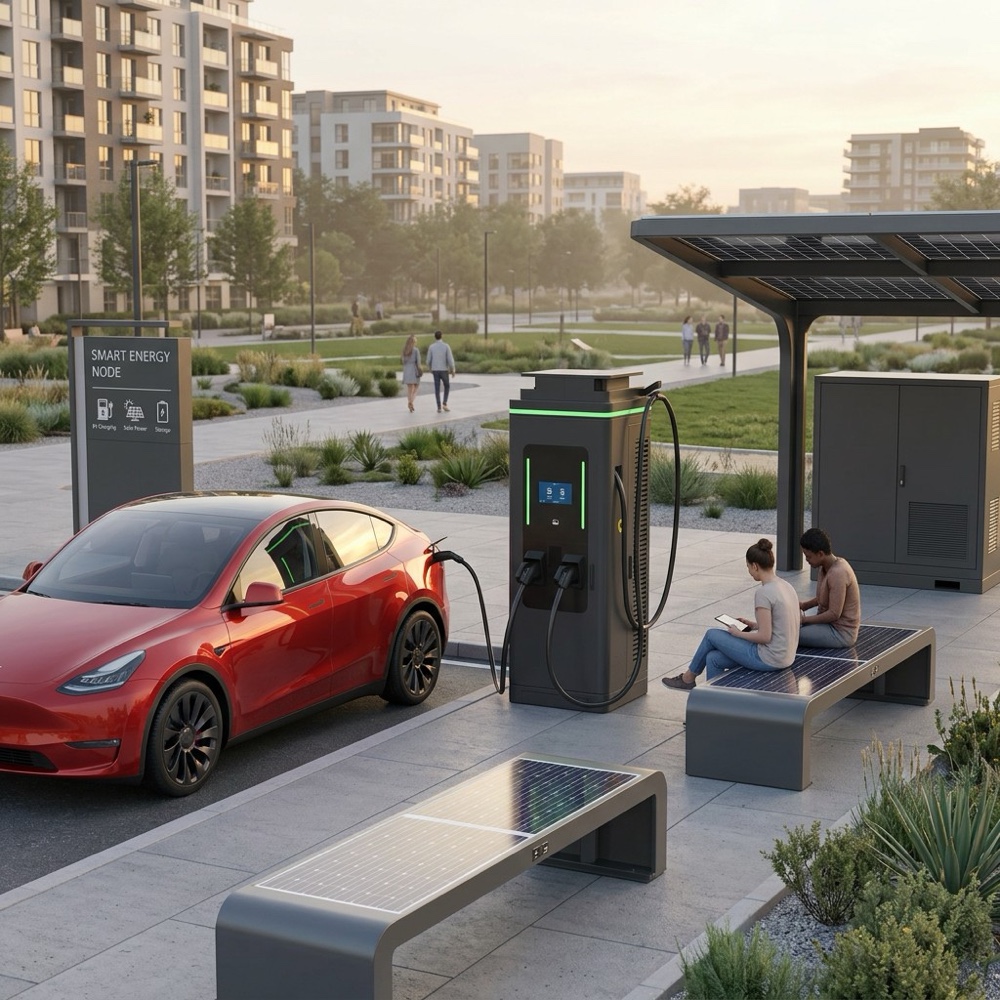
MD-EU 320/360kW Dual-Output DC Fast Charger
1. Product Overview
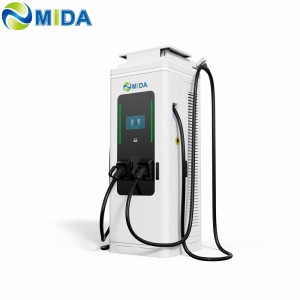
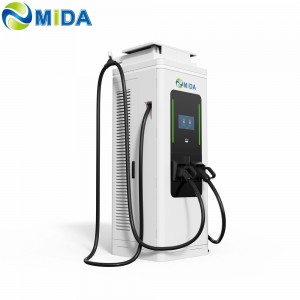
The MD-EU 320/360kW is a high-power, dual-output DC fast charger built for the most demanding segment of the electric vehicle market: heavy-duty fleets, long-haul corridors and high-density charging hubs where power, speed and reliability are non-negotiable. Offered with 320kW or 360kW of rated output power, the platform gives operators the headroom to charge large commercial vehicles efficiently while two independent outputs keep smaller traffic moving at the same time. One cabinet, two simultaneous sessions, and enough energy to make real progress on the largest batteries in service.
The electrical platform is engineered for commercial-scale performance. The charger operates from a 400Vac ±10% three-phase supply and converts it to a regulated DC output across the full 200–1000Vdc range, the voltage window that matters for heavy-duty applications where 800V and higher battery architectures are becoming the norm. Maximum output current reaches 350A, ensuring that high-voltage truck batteries receive current at the rate their cell designs allow, and conversion efficiency exceeds 95%, which is critical at this power level where even a few points of loss translate into significant annual energy cost.
Interoperability is built for a global market. The MD-EU 320/360kW supports CCS, CHAdeMO, GB/T and NACS connectors, so the station serves European, North American and Asian vehicles from the same footprint, with each of the two outputs independently configurable to the site’s connector strategy. Connectivity through 4G, Wi-Fi and Ethernet, together with OCPP 1.6 and OCPP 2.0 support, drops the charger into any modern charging management platform. An IP54 enclosure, forced-air cooling and CE/TUV certification complete a package engineered for years of dependable outdoor operation.
Heavy-duty duty cycles demand more than peak power; they demand sustained capability. A truck depot session can run for an hour or more at high current, followed by another session minutes later, and the station must hold rated performance through that sequence day after day. The MD-EU 320/360kW is engineered for exactly this profile: the forced-air cooling system is sized for continuous high-current operation, the power modules are derated conservatively to preserve lifetime, and the control system manages thermal behavior proactively, so the station does not silently reduce performance just when a fleet needs it most. The 200–1000Vdc output range is equally important for heavy duty: many of today’s electric trucks operate on high-voltage architectures, and the charger delivers their native voltage without derating, up to the 350A current limit. Meanwhile, the second output remains available for vans, cars or yard equipment, so a depot does not need separate chargers for different vehicle classes. The result is a single, durable platform that carries the full electrical load of a modern mixed fleet through its operational lifetime.
2. Key Features & Benefits
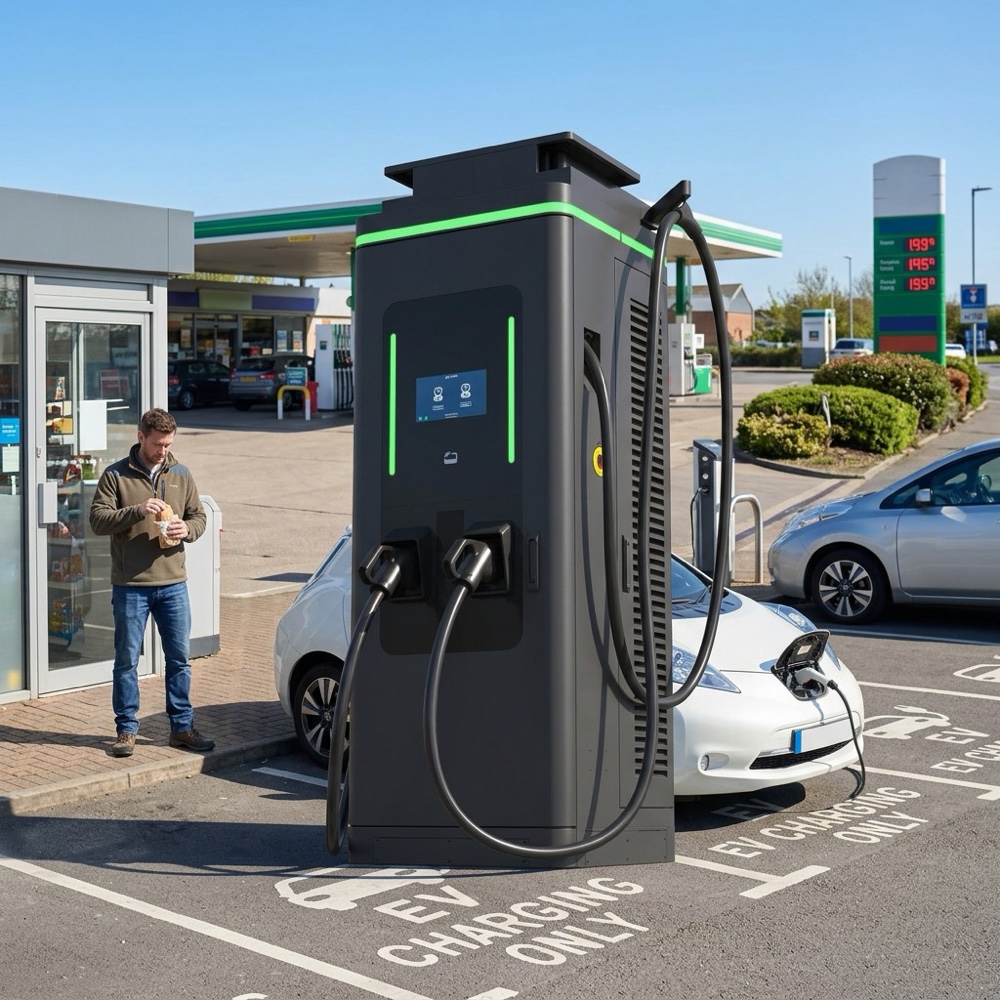
- 320kW or 360kW of output power. The headroom to charge heavy-duty vehicles with large battery packs in realistic turnaround windows, and to serve multiple passenger sessions in parallel through dynamic allocation.
- Dual outputs for continuous throughput. Two vehicles charge simultaneously, and the controller rebalances power between sessions in real time, so the station keeps delivering even during peak demand.
- 200–1000Vdc output range. Full support for 400V passenger vehicles and high-voltage 800V-plus commercial platforms, with automatic voltage matching per session and no derating.
- 350A maximum current. The current capability required to fast-charge large truck batteries efficiently, delivered precisely where the vehicle’s charging curve allows.
- Efficiency greater than 95%. At 320–360kW, every percentage point of efficiency is worth real money; above-95% conversion keeps losses, heat and operating costs under control.
- CCS, CHAdeMO, GB/T and NACS support. Global connector compatibility with per-output configuration, so one station design serves any regional vehicle mix.
- OCPP 1.6 and OCPP 2.0 with 4G, Wi-Fi and Ethernet. Redundant, standards-based connectivity for seamless integration, secure remote management and future smart-charging programs.
- IP54 enclosure and forced-air cooling. Rugged outdoor construction with a simple thermal design that keeps power modules cool with simple, serviceable components and no specialized maintenance.
- CE and TUV certification. Independently audited safety and performance that accelerates project approvals and underpins long-term reliability.
3. Technical Specifications
The following table documents the final specifications of the MD-EU 320/360kW platform. These values are the validated design parameters that govern performance in the field.
| Parameter | Specification |
|---|---|
| Model | MD-EU 320/360kW |
| Input voltage | 400Vac ±10% (three-phase) |
| Output voltage | 200–1000Vdc |
| Output power | 320kW / 360kW (selectable) |
| Max output current | 350A |
| Output configuration | Dual output (two vehicles simultaneously) |
| Efficiency | >95% |
| Connector standards | CCS, CHAdeMO, GB/T, NACS |
| Cooling | Forced-air cooling |
| Enclosure rating | IP54 |
| Communication | 4G, Wi-Fi, Ethernet |
| Charging protocol | OCPP 1.6, OCPP 2.0 |
| Certifications | CE, TUV |
At this power level, every specification has operational meaning. The 400Vac ±10% input tolerance protects against real grid variability at industrial and highway sites, where transformer loading fluctuates through the day. The 200–1000Vdc output range with the 350A current limit defines a wide operating envelope that keeps the station relevant as battery voltages climb: an 800V truck battery, a 400V delivery van and a passenger car all see the voltage and current profile their electronics request, up to the rated power of the configuration.
The dual-output controller is central to the platform’s economics. It continuously arbitrates between the two active sessions, directing power to whichever vehicle can use it most effectively at any instant. When a truck session starts, it receives the bulk of available power; when its charge rate tapers, surplus power flows to the second vehicle automatically. This intelligent allocation maximizes total energy delivered per hour, which is the metric that determines payback on high-power infrastructure.
Real-world grid conditions are where the 320/360kW platform earns its keep. Charging heavy-duty vehicles at this power level draws substantial current from the site’s transformer, and the charger’s input design helps keep that draw well-behaved: smooth power ramps at session start, configurable ramp rates for sites with limited grid headroom, and input tolerance across 400Vac ±10% that keeps the station delivering rated power through the voltage variations common at industrial locations. The control system also manages the transition between the two outputs gracefully, so a truck starting a session while a van finishes does not create disruptive load steps on the AC side. For sites sharing a transformer with other equipment, the charger’s OCPP-based load reporting lets the site controller coordinate multiple units, capping total demand during peaks and maximizing throughput when capacity is available. These behaviors matter as much as peak kilowatts: they determine whether a site can actually deploy 320kW or 360kW on its existing connection, and whether the station remains a stable, predictable load for the utility over years of operation.
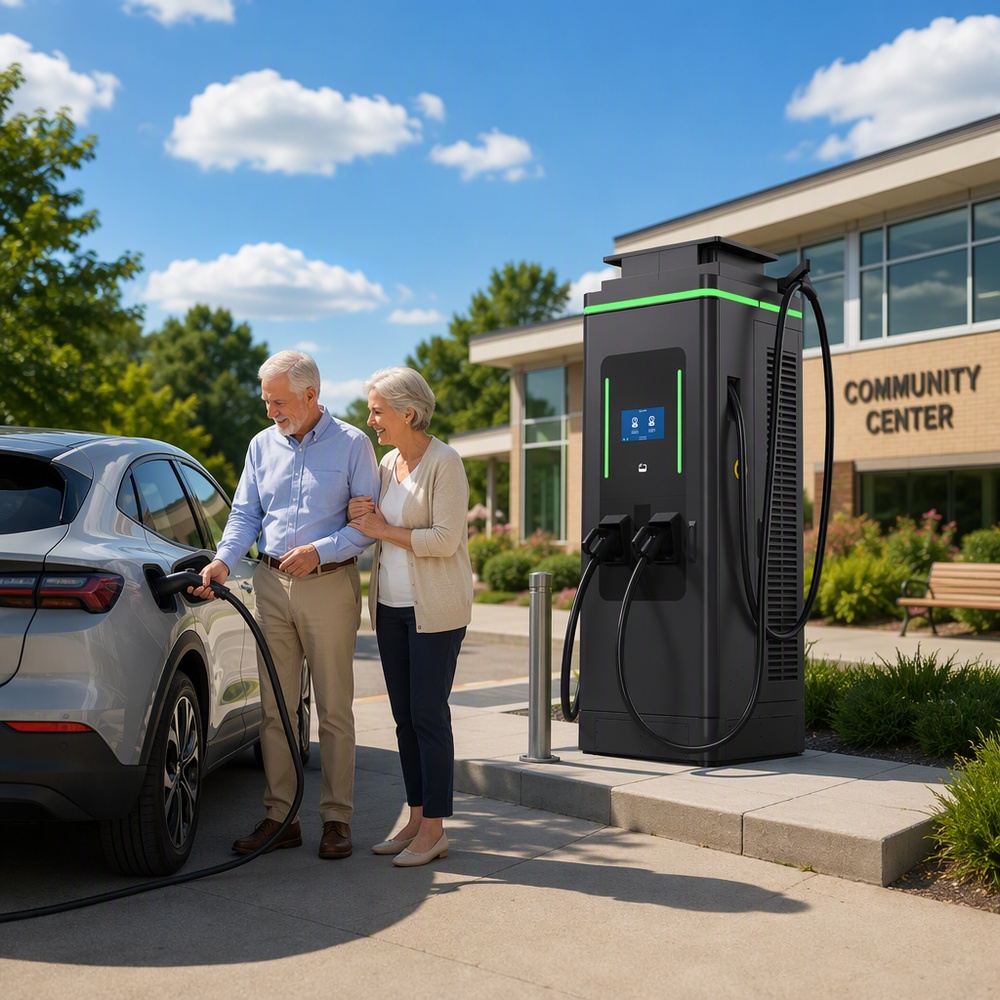
4. Charging Protocols & Connector Compatibility
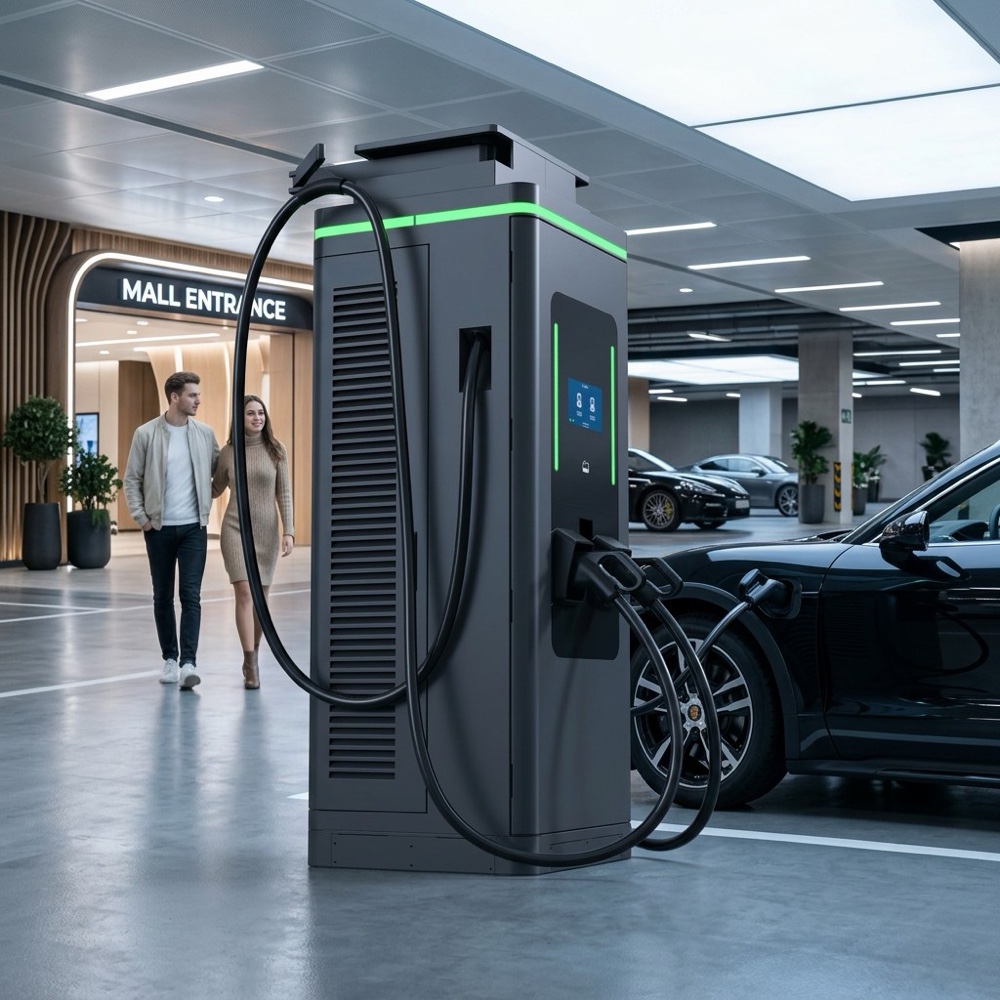
Commercial charging networks serve mixed traffic, and the MD-EU 320/360kW is designed to leave no vehicle behind. The platform supports the four connector standards that matter worldwide: CCS, CHAdeMO, GB/T and NACS. CCS is the dominant fast-charging standard in Europe and North America, CHAdeMO remains embedded in the Japanese vehicle fleet, GB/T is the standard of the Chinese market, and NACS is the rising North American standard adopted by a growing list of manufacturers. Supporting all four ensures that a station can be specified with confidence for any region and any vehicle mix.
The dual outputs multiply this versatility. Output A and output B can be configured with different connectors, so a corridor station can pair CCS with CHAdeMO, or GB/T with NACS, covering the local population precisely. Alternatively, both outputs can share the same connector where a homogeneous fleet dominates, effectively creating two fast-charging bays. Because each output is independently controlled, mixed sessions do not interfere: the 200–1000Vdc and 350A envelope is managed per session, and the 320/360kW budget is shared according to each vehicle’s real-time demand.
For heavy-duty applications, the charging curve matters as much as the peak rating. Large truck batteries accept high current through a substantial portion of their state-of-charge range, and the MD-EU 320/360kW is built to deliver it: up to 350A, matched to the battery voltage across the full output window. This means a truck arriving at a depot with a depleted pack can be turned around in a time window that fits operational schedules, while the second output continues serving other traffic in parallel. It is the combination of high power, high current and dual output that makes the station a genuine commercial asset rather than a convenience feature.
Depot operations illustrate the value of parallel heavy-duty and light-duty charging. A fleet terminal typically has a narrow window to recharge trucks between shifts; the MD-EU 320/360kW dedicates its power budget to the truck when it connects, exploiting the truck’s high-voltage architecture and the platform’s 350A current capability to restore range quickly. Meanwhile, the second output can serve a light commercial van or a staff vehicle, using whatever capacity the truck session leaves free. The controller prioritizes dynamically: it can hold the truck session at maximum charge rate, taper it near its target, and release surplus power to the second vehicle without any manual intervention. On highway corridors, the same logic lets a station serve a long-haul truck and a passenger car simultaneously, each at the voltage and current its battery requests within the 200–1000Vdc envelope. This ability to mix vehicle classes on one cabinet is what makes the platform attractive to operators who cannot predict exactly what will arrive next, and it keeps the station’s utilization high across the full day rather than only during fleet windows.
5. Smart Connectivity, OCPP & Remote Management
At 320–360kW, a charging station is a major grid-connected asset, and managing it remotely is not optional. The MD-EU 320/360kW provides 4G cellular, Wi-Fi and Ethernet interfaces, giving network operators the redundancy they need: a primary wired connection with automatic fallback to cellular, or any combination that fits the site’s infrastructure. Sessions continue, billing continues and monitoring continues even when a single communication path is lost, protecting both uptime and revenue.
Protocol support covers OCPP 1.6 and OCPP 2.0, the two generations that define charging management integration today. OCPP 1.6 provides the mature, battle-tested feature set that virtually every backend platform understands, while OCPP 2.0 delivers the enhanced security, firmware management and smart-charging messaging that modern energy markets require. Dual-protocol support means operators can standardize on one charger hardware across a network that may run several different backend platforms, and can migrate platforms over time without touching the field equipment.
The remote management surface is comprehensive. Operators see live power delivery on both outputs, session records, energy accounting and fault states from their central platform, and can remotely start or stop sessions, adjust pricing, change access rules and schedule firmware updates. Fault events trigger immediate backend notifications, enabling dispatch decisions based on data rather than guesswork. With efficiency above 95% and accurate measurement throughout, the station provides the trustworthy energy data that fleet operators need for cost allocation and that network operators need for performance analytics.
Fleet operators need data that flows into their own systems, and the MD-EU 320/360kW is built to supply it. Session records captured through OCPP include energy delivered, duration, peak power and per-output breakdowns, which integrate cleanly into telematics platforms, fleet management software and accounting systems for per-vehicle cost allocation. For network operators, the same data supports utilization analytics, availability tracking and maintenance planning across many sites, all visible through the charging management platform over 4G, Wi-Fi or Ethernet. The charger also supports the secure, role-based workflows that enterprise environments expect: operators, service engineers and finance teams can interact with the asset through the backend with appropriate controls, and audit trails capture configuration changes for compliance review. When a network expands, the OCPP 1.6 and 2.0 implementation means new sites join the same platform without custom development, and the communication redundancy built into the charger keeps data flowing even when a site’s primary link degrades. In short, the platform is designed to be a well-behaved, data-rich node in the operator’s digital ecosystem, not an island.
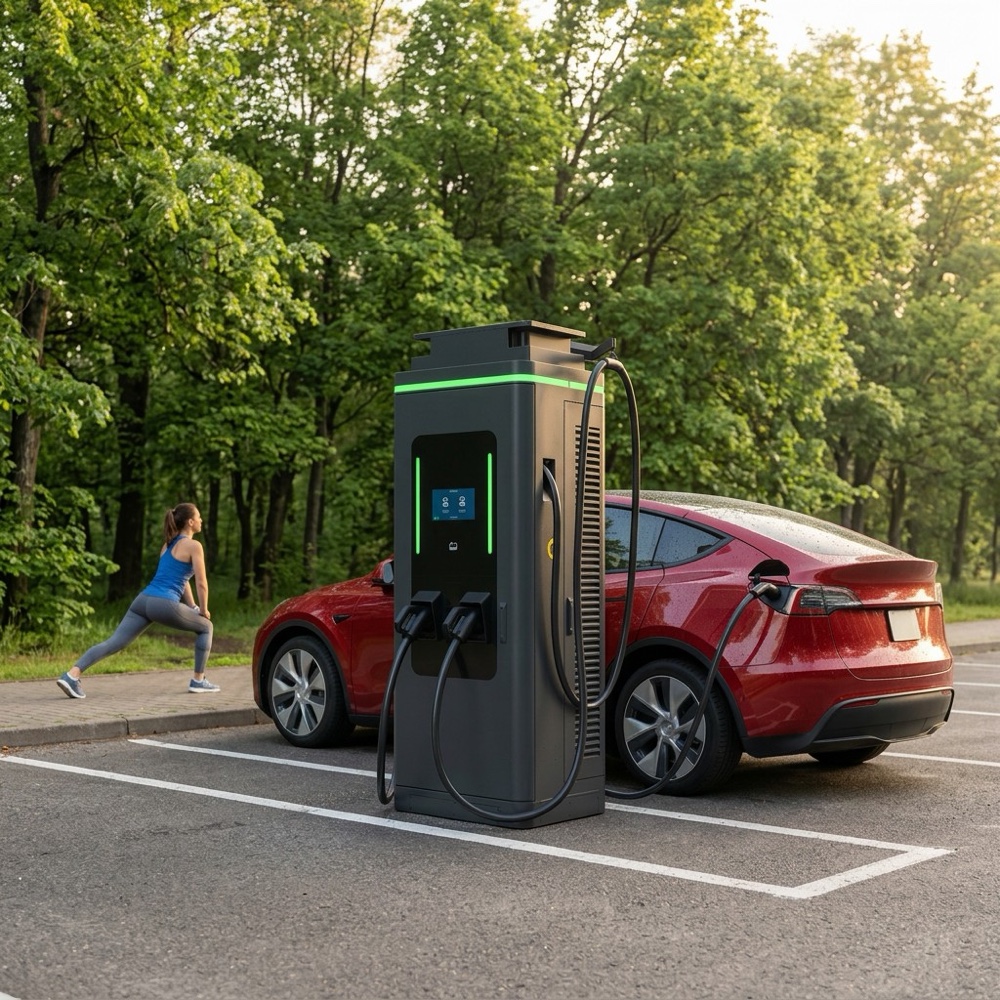
6. Safety, Cooling & Certifications
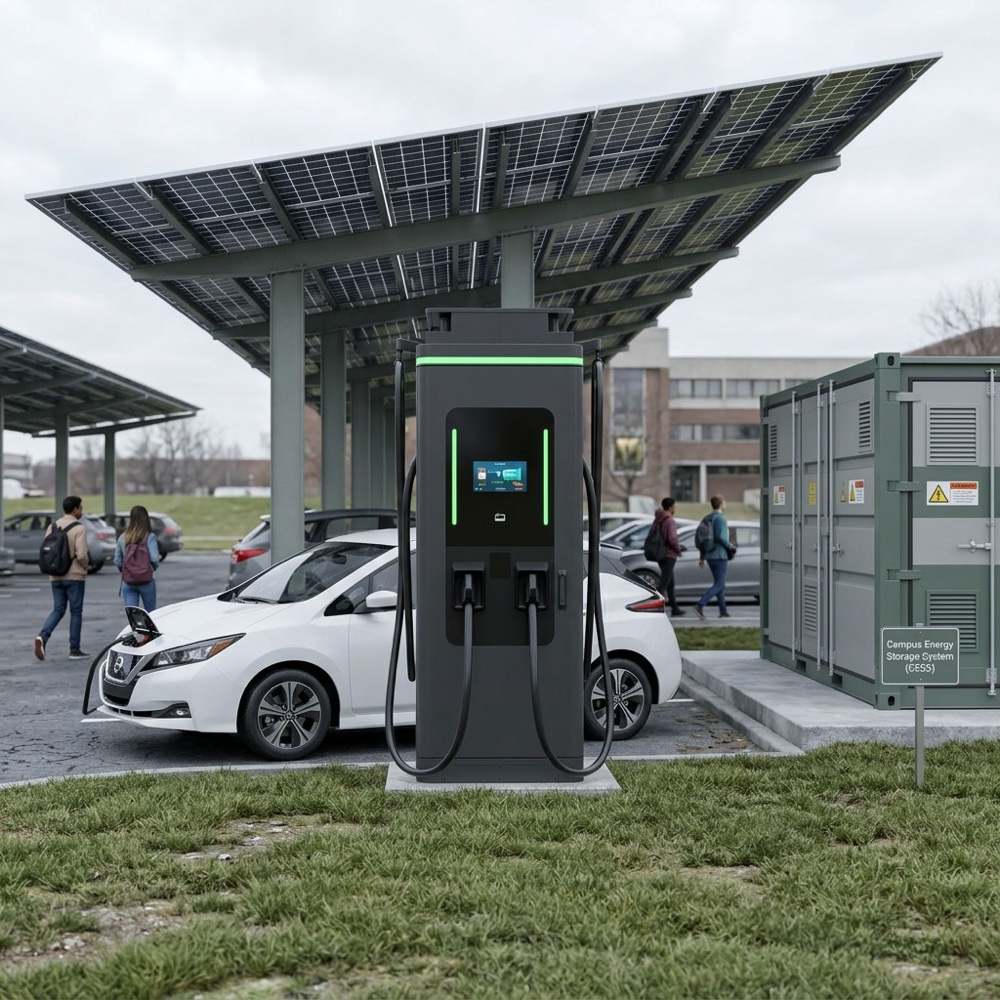
High-power charging multiplies the consequences of failure, so the MD-EU 320/360kW is built around layered protection. The IP54 enclosure shields the power electronics from dust and water splashes in outdoor installations, from highway service plazas to open depot yards. Inside, redundant protection functions monitor over-voltage, under-voltage, over-current, over-temperature and leakage conditions at every stage of the power path, halting delivery safely and reporting to the operator when any threshold is crossed.
Thermal management is forced-air cooling, selected for its proven reliability in high-power outdoor service. Filtered airflow keeps the power modules within their specified temperature envelope through sustained high-current sessions and hot-weather operation, without the complexity of pumps, coolants or leak-prone systems. The absence of pumps and coolant removes the most common failure modes of alternative cooling architectures and eliminates specialized maintenance requirements; routine service is limited to scheduled filter care that any qualified technician can perform.
Certification evidence completes the engineering story. The MD-EU 320/360kW carries CE marking and TUV certification, supported by documented testing of electrical safety, electromagnetic compatibility and performance. These credentials ease grid connection applications, permitting and insurance across the markets where the product is deployed, and give operators an auditable quality baseline that protects both safety and network reputation over the asset’s lifetime.
Industrial environments add their own hazards, and the platform’s protection set is specified accordingly. In addition to over-voltage, under-voltage, over-current and over-temperature protection, the charger includes robust short-circuit and fault-current handling on both the AC input and the DC outputs, protecting equipment and operators during abnormal events. Grounding and bonding provisions follow best practice for high-power equipment and support the work of site electricians and inspectors. Electromagnetic compatibility is validated through the documented EMC testing that underpins the CE and TUV certifications, so the charger coexists with the radios, controllers and sensors found in depots and service areas without interference, and its own 4G, Wi-Fi and Ethernet links remain reliable in that environment. The enclosure is designed for real industrial exposure: sealed cable entries, protected connectors, and finishes that resist corrosion from road salt and industrial atmospheres. Because serviceability is part of safety, the cabinet layout gives technicians safe access to serviceable components with clear labeling and isolation points, keeping both the people who maintain the station and the people who charge at it protected throughout the asset’s life.
7. Applications & Why Choose MD-EU
The MD-EU 320/360kW is the power class for heavy-duty transition. Truck fleet depots use it to recharge electric distribution trucks and yard vehicles between duty cycles, where the combination of 320/360kW output and 350A current restores meaningful range in scheduled turnaround windows. Highway charging plazas deploy it on corridors serving mixed traffic, using the dual outputs to handle a truck and a passenger car simultaneously. Logistics hubs, airport ground-support operations and port facilities use it to electrify equipment fleets that previously depended on diesel, with the IP54 enclosure and forced-air cooling standing up to harsh industrial environments.
The economics at this power level are driven by utilization and efficiency. More than 95% conversion efficiency keeps the energy bill for each session as low as physics allows. The dual-output architecture doubles the productive use of each bay, grid connection and square meter of site. The 200–1000Vdc range and multi-standard connector support make the asset future-proof as vehicle architectures evolve. CE/TUV certification and IP54 construction keep approval and maintenance costs down, and OCPP 1.6/2.0 connectivity over 4G, Wi-Fi and Ethernet integrates the station into the operator’s existing management stack.
Operators evaluating the MD-EU 320/360kW can verify the platform against a fixed specification: 400Vac ±10% input, 200–1000Vdc output, 350A maximum current, greater than 95% efficiency, dual outputs, CCS/CHAdeMO/GB/T/NACS compatibility, 4G/Wi-Fi/Ethernet connectivity, OCPP 1.6 and 2.0, IP54 rating, forced-air cooling, and CE/TUV certification. For sites that need heavy-duty power with commercial-grade reliability, the MD-EU 320/360kW is engineered to deliver.
Scaling from a single site to a network is the natural next step, and the MD-EU 320/360kW is designed to be replicated. Because every unit shares the same specification, operators can standardize on spares, training and installation procedures from one site to the next, driving down the cost of expansion. At a corridor location, a pair of MD-EU 320/360kW units can create a four-bay charging plaza, with each cabinet managing its own two outputs and the site’s energy management system coordinating total load through OCPP. At a megasite under development, the same units integrate with the site controller, sharing grid capacity intelligently and ramping power to match transformer capability. The platform’s 400Vac ±10% input tolerance and its dual-output architecture make each cabinet a building block rather than a one-off design, and its CE and TUV certification streamlines approval at every new site. Whether the plan calls for two bays today or forty bays in five years, the MD-EU family gives operators a single, consistent technology base, with the 320/360kW models providing the heavy-duty power headroom that corridor and freight applications will need as electric trucks reach the mainstream.
Products categories
-
MIDA 400kW Ultra Fast DC Charger CCS2 Dual Gun ...
-
MIDA 240kW 320kW DC Fast Charger CCS2 Dual Gun ...
-
MIDA 160kW 180kW DC Fast Charger CCS2 EV Chargi...
-
MIDA 120kW Dual Gun DC Fast Charger CCS2 EV Cha...
-
MIDA 60kW 80kW Dual Gun DC Fast Charger CCS2 EV...
-
MIDA 120kW 200kWh BESS DC Fast Charging System ...